

Key Takeaways
Getting dressed takes less time and mental energy
Fewer choices means fewer decisions. Research on decision fatigue suggests that reducing low-stakes choices early in the day can preserve mental energy for more important tasks.
Easier to keep your space organized
A smaller wardrobe is simply easier to maintain. Folding, hanging, and finding things takes less time when there's less of everything.
Spending tends to slow down naturally
When your closet is intentional, there's less psychological space for impulse buying. Many people find their clothing spend drops significantly after a genuine edit.
You wear what you own more consistently
Studies on clothing usage consistently find that most people wear a small fraction of their wardrobe regularly. Owning less closes that gap between what you have and what you actually use.
Traveling and packing becomes markedly simpler
When your items are versatile and mix-and-match by design, packing a bag - for a weekend or a week - becomes fast and low-stress.
Upfront cost can be significant
Shifting to fewer, higher-quality pieces often means spending more per item. That investment pays off over time, but it can feel like a financial barrier at the start.
Life variety is genuinely hard to cover
Active, varied lifestyles - gym clothes, professional attire, casual wear, formalwear - don't compress neatly into a tiny wardrobe without real compromise or frequent re-wearing.
Laundry frequency increases considerably
Owning fewer items means each piece gets worn more often, which means washing more regularly. For people with limited time or laundry access, this is a real logistical issue.
Social pressure and judgment can be a factor
In some workplaces and social circles, visibly wearing the same items on rotation can attract unwanted commentary, which makes the psychological ease of minimalism harder to fully enjoy.
Less flexibility for mood-driven dressing
Clothing is expressive, and some people genuinely enjoy the creative freedom of having options. A stripped-down wardrobe can feel restrictive rather than liberating for more style-expressive personalities.
Our Verdict
A minimal wardrobe genuinely delivers on its promises - simpler mornings, less clutter, and more thoughtful spending - but only when your lifestyle is reasonably consistent and your foundational pieces are already strong. It is not a shortcut to effortless style; it requires upfront effort, honest self-assessment, and a willingness to do laundry more often.
Best suited to adults with relatively stable daily routines who want to cut through closet clutter and dress with more intention, rather than more options.
What 'Owning Fewer Clothes' Actually Means
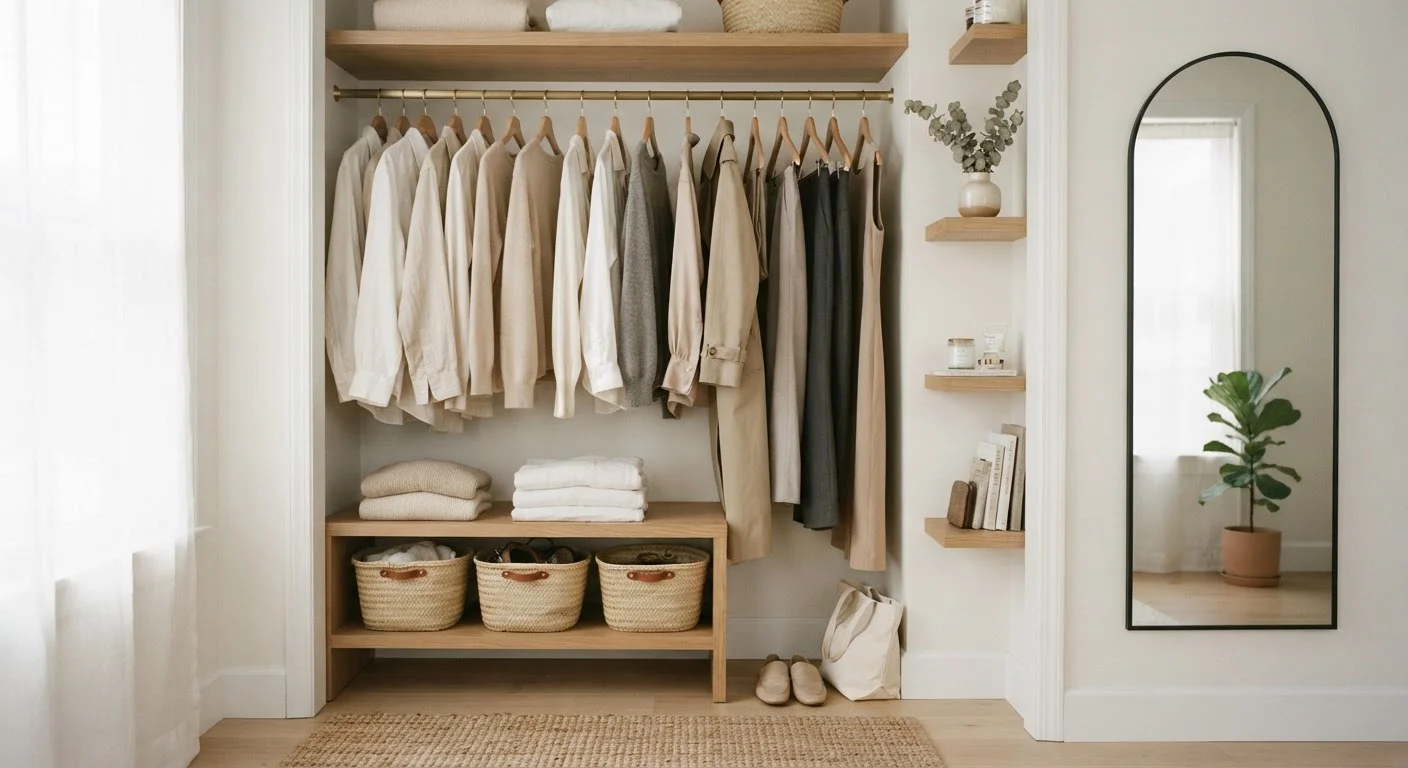
Minimalism in fashion doesn't mean owning ten items and calling it done. It means being deliberate: keeping only what you actually wear, what fits well, and what earns its space. For some people that's 30 pieces; for others it might be 60. The number matters far less than the principle behind it.
If you've ever stared at a full closet and felt like you had nothing to wear, you already understand the core problem minimalism tries to solve. More clothing doesn't automatically mean more options - it often just means more noise. The question is whether trimming that noise is worth the real trade-offs involved.
Before going further, it helps to have a strong sense of what you already own and what actually works. Our guide on wardrobe basics every adult should own is a solid starting point for building that foundation.
The Real Advantages of a Smaller Closet
The benefits of owning fewer clothes aren't just aesthetic - they show up in your daily routine, your budget, and your mental bandwidth.
Getting dressed takes less time and mental energy
Fewer choices means fewer decisions. Research on decision fatigue suggests that reducing low-stakes choices early in the day can preserve mental energy for more important tasks.
Easier to keep your space organized
A smaller wardrobe is simply easier to maintain. Folding, hanging, and finding things takes less time when there's less of everything.
Spending tends to slow down naturally
When your closet is intentional, there's less psychological space for impulse buying. Many people find their clothing spend drops significantly after a genuine edit.
You wear what you own more consistently
Studies on clothing usage consistently find that most people wear a small fraction of their wardrobe regularly. Owning less closes that gap between what you have and what you actually use.
Traveling and packing becomes markedly simpler
When your items are versatile and mix-and-match by design, packing a bag - for a weekend or a week - becomes fast and low-stress.
Perhaps the most underrated benefit is how quickly you stop buying things you don't need. When you've already curated your closet carefully, impulse purchases feel out of place rather than exciting. That shift in mindset is worth something. For a practical framework on making every dollar count, building a versatile wardrobe on a budget walks through exactly how to prioritize and resist the pull of trend-driven buying.
The Honest Disadvantages You Should Know
The lifestyle bloggers who make minimal wardrobes look effortless tend to leave out the friction. Here's where things genuinely get harder.
Upfront cost can be significant
Shifting to fewer, higher-quality pieces often means spending more per item. That investment pays off over time, but it can feel like a financial barrier at the start.
Life variety is genuinely hard to cover
Active, varied lifestyles - gym clothes, professional attire, casual wear, formalwear - don't compress neatly into a tiny wardrobe without real compromise or frequent re-wearing.
Laundry frequency increases considerably
Owning fewer items means each piece gets worn more often, which means washing more regularly. For people with limited time or laundry access, this is a real logistical issue.
Social pressure and judgment can be a factor
In some workplaces and social circles, visibly wearing the same items on rotation can attract unwanted commentary, which makes the psychological ease of minimalism harder to fully enjoy.
Less flexibility for mood-driven dressing
Clothing is expressive, and some people genuinely enjoy the creative freedom of having options. A stripped-down wardrobe can feel restrictive rather than liberating for more style-expressive personalities.
Transitioning Gradually Makes It Easier
The shift toward fewer, better-quality pieces can make minimalism feel financially out of reach at the start. The good news: you don't have to replace everything at once. Transition gradually - retire items as they wear out rather than doing a dramatic one-day purge. This approach is gentler on your budget and gives you time to learn what you actually miss versus what you thought you needed.
The shift toward fewer, better-quality pieces can make minimalism feel financially out of reach at the start. The good news: you don't have to replace everything at once. Transition gradually - retire items as they wear out rather than doing a dramatic one-day purge.
Is Minimalism Right for Your Life?
The honest answer depends on how varied your daily life actually is. If you move between an office, weekend outdoor activities, a gym, and the occasional formal event, a very small wardrobe will create real stress. You'll either re-wear items too quickly or find yourself in the wrong outfit for the moment.
~20%
Clothes worn regularly from a typical wardrobe
Consumer behavior research consistently estimates that most people regularly wear only about 20% of the clothing they own, leaving the rest largely unused.
2x
Average clothing purchases per person vs. 20 years ago
According to data from environmental researchers, consumers in developed countries buy roughly twice as many garments per year as they did two decades ago.
On the other hand, if your days follow a fairly consistent rhythm, owning fewer, well-chosen pieces is genuinely freeing. The key is treating minimalism as a method for editing, not as a competition to hit the lowest possible number. Check out the concept of a capsule wardrobe if you want a structured approach to building a small, cohesive collection that still covers your lifestyle.
And if this kind of intentional thinking appeals to you across the board, the same logic applies to personal care - our piece on building a minimal personal care kit shows how paring back your products can have the same clarifying effect.
When seasons shift and you find yourself managing what stays and what gets stored, a structured approach helps - seasonal wardrobe transition tips can keep that process calm and clutter-free.