

| Minimum viable basics | Roughly 10-15 core items cover the majority of everyday needs for most adults |
| Most versatile single item | A well-fitting, neutral-colored tee - pairs with jeans, trousers, blazers, and outerwear |
| Key attribute of any true basic | Fit, neutral color, and durable construction - all three matter |
| When to seek alterations | Any piece that fits in one dimension (shoulders, chest) but not another (length, waist) is a good alteration candidate |
| Footwear priority | Clean, low-profile sneakers plus one dresser shoe handles the vast majority of daily and formal situations |
Why Basics Come First
Most closet frustration follows a familiar pattern: too many clothes, nothing to wear. The culprit is usually a wardrobe built around impulse buys and trend pieces with no reliable foundation underneath. Before adding anything new, it helps to identify the core items that do the heavy lifting every single day.
Wardrobe basics - sometimes called wardrobe staples - are pieces that work across multiple occasions, pair easily with other items, and hold their usefulness from season to season. They're not glamorous, but they make everything else in your closet more functional. Think of them as the grammatical structure that lets individual statement pieces make sense.
If you're working with a limited budget, starting with basics is especially smart. See our realistic roadmap for building a versatile wardrobe on a budget for a broader framework on where to focus your spending first.
| Minimum viable basics | Roughly 10-15 core items cover the majority of everyday needs for most adults |
| Most versatile single item | A well-fitting, neutral-colored tee - pairs with jeans, trousers, blazers, and outerwear |
| Key attribute of any true basic | Fit, neutral color, and durable construction - all three matter |
| When to seek alterations | Any piece that fits in one dimension (shoulders, chest) but not another (length, waist) is a good alteration candidate |
| Footwear priority | Clean, low-profile sneakers plus one dresser shoe handles the vast majority of daily and formal situations |
The Core Wardrobe Basics List
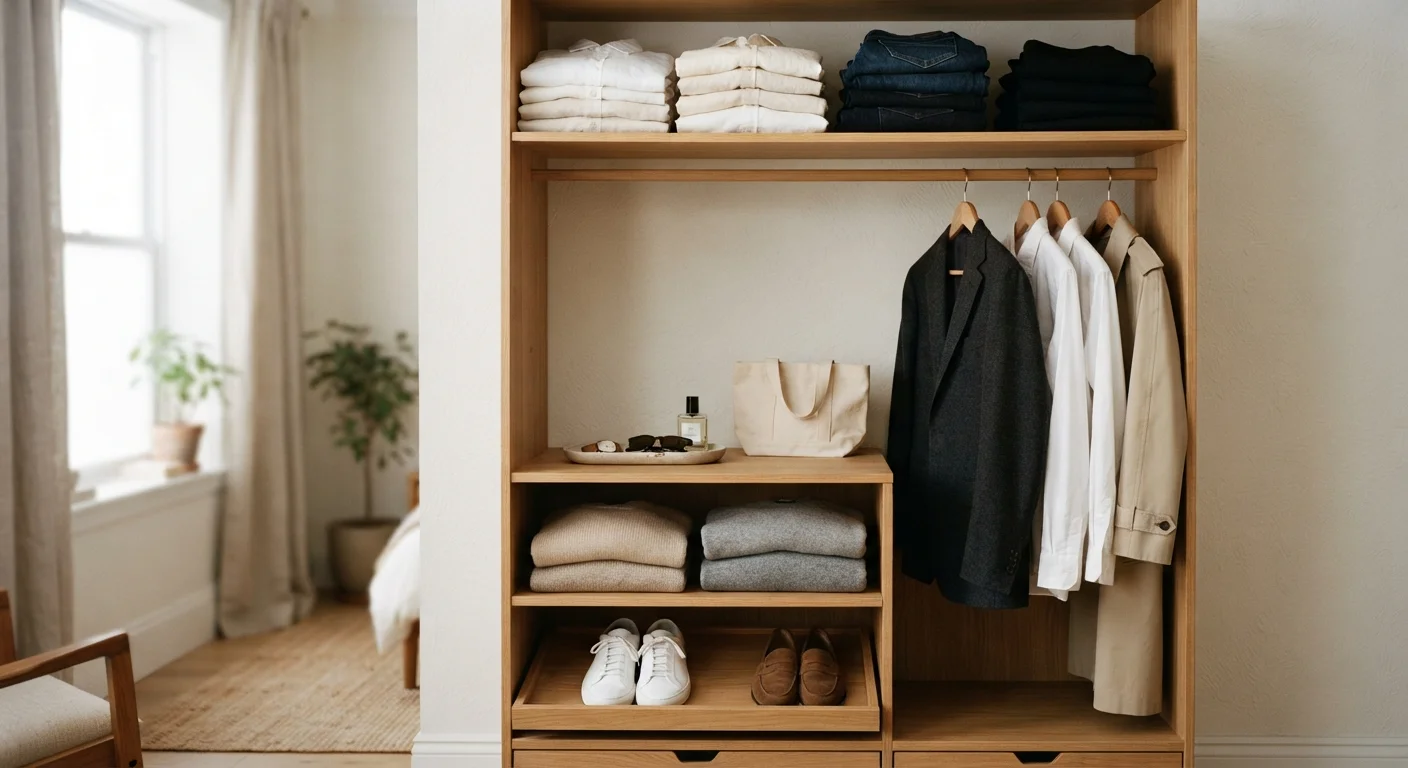
The following categories represent items that most adults will reach for consistently, regardless of personal style. This isn't a prescriptive shopping list - it's a reference for evaluating what you already own and identifying genuine gaps.
Tops
- White or light neutral crew-neck or V-neck tee - the single most versatile top in any wardrobe
- A well-fitting button-down shirt (chambray, Oxford cloth, or plain poplin) - dresses up or down depending on what it's tucked into
- A simple crewneck or half-zip pullover in a neutral color - bridges casual and smart-casual effortlessly
Bottoms
- Dark-wash straight or slim jeans - dressier than light-wash, versatile enough for most non-formal occasions
- A pair of well-cut trousers or chinos in navy, tan, or gray - suitable for work, events, or a polished everyday look
Outerwear
- A structured blazer or sport coat - adds instant polish over almost any outfit; one neutral color covers most needs
- A classic outer layer for your climate - a trench, peacoat, or simple insulated jacket depending on where you live
Footwear
- Clean white or natural leather sneakers - not athletic trainers; low-profile, clean-lined styles
- A simple leather or leather-look shoe - loafer, derby, or Chelsea boot - suitable for interviews, dinners, and work
Undergarments & Foundational Layers
- Well-fitting undergarments in neutral tones
- A few plain white or gray undershirts if you layer
Once these slots are filled - even partially - you're in a position to build cohesive outfits from what you already own without constantly feeling stuck.
Wardrobe staple
A clothing item that works across multiple occasions, seasons, and outfit combinations. Staples form the reliable core of a functional wardrobe and are distinguished from trend-driven or occasion-specific pieces.
Neutral color
Colors such as white, black, navy, gray, camel, and olive that coordinate easily with most other hues. Neutrals are the backbone of a versatile wardrobe because they pair predictably and don't compete with accent pieces.
Smart-casual
A dress standard that falls between formal business attire and everyday casual wear. Smart-casual typically means neat, well-fitting clothes - such as chinos and a button-down - without requiring a suit or tie.
Silhouette
The overall shape or outline of a garment as it falls on the body. A flattering silhouette is often more important than fabric or brand in determining how polished a piece looks when worn.
Foundation layer
A basic undergarment or undershirt worn beneath other clothing. Foundation layers create a clean line under outerwear and protect garments from direct contact with skin.
What Makes a Basic Actually Versatile
Not every plain item qualifies as a true wardrobe basic. The key attributes are fit, color, and texture. A piece that fits poorly or is made in a very specific or trendy color will always feel harder to work with, no matter how simple its design.
Fit: Basics should fit your body as it is right now - not aspirationally. Clothes that don't fit well tend to stay unworn. Many alterations are inexpensive and can transform a near-miss piece into a genuine wardrobe workhorse.
Color: Neutrals - navy, white, gray, black, camel, olive - are the backbone of a versatile foundation. This doesn't mean your wardrobe must be colorless, but your basics should coordinate with one another without effort. Practical color coordination principles can help you understand which tones work best together in a real-life wardrobe.
Texture and construction: A well-constructed piece in a quality fabric will hold its shape, drape better, and last longer than a cheaper version of the same silhouette. That said, price alone isn't a reliable indicator - focus on construction details like flat seams, sturdy closures, and fabric weight.
Once your basics are in place, you may find your wardrobe already covers most situations - including professional ones. Getting dressed for a job interview without buying anything new is entirely achievable with a solid foundation.
Curious how this foundational approach connects to minimalist or capsule-style thinking? Learn what a capsule wardrobe actually means and whether that philosophy suits your lifestyle.