

Key Takeaways
Start here
How Your Braking System Works
Next
The Four Core Components
Then
Warning Signs Your Brakes Need Attention
Apply it
Brake Maintenance: What Drivers Can Do
Know your limits
When to See a Qualified Mechanic
How Your Braking System Works
Every time you press the brake pedal, a carefully engineered chain of events brings your vehicle to a stop. Modern passenger cars use a hydraulic braking system - meaning force is transmitted through pressurized fluid rather than mechanical cables alone. Here's the basic sequence:
- You press the pedal, which pushes a master cylinder that pressurizes brake fluid.
- That pressurized fluid travels through brake lines to each wheel.
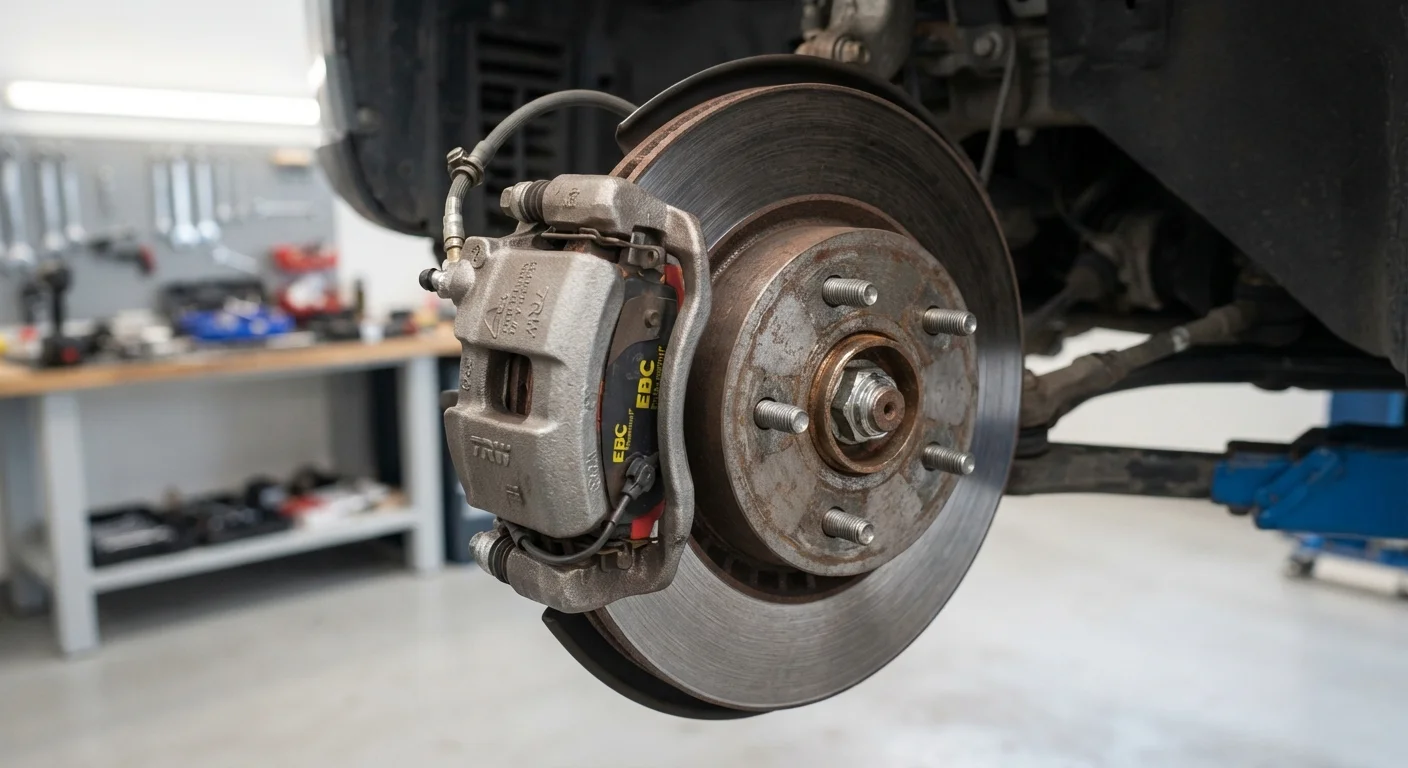
- At each wheel, a caliper squeezes brake pads against a spinning rotor (disc), creating friction.
- Friction converts the vehicle's kinetic energy into heat, slowing the wheel.
Most vehicles today use disc brakes on all four wheels, though some still use drum brakes at the rear. Disc brakes are generally more effective at heat dissipation and are the focus of this guide. Understanding this system is a foundational part of responsible car ownership.
Hydraulic braking system
A system that uses pressurized fluid to transmit the force from your brake pedal to the brake components at each wheel.
Brake pad
A replaceable friction component that presses against the rotor to slow the wheel. It's the most commonly replaced part of the brake system.
Rotor (disc)
The large metal disc attached to the wheel hub. Brake pads clamp against it to create the friction that slows the vehicle.
Caliper
The hydraulically actuated clamp that squeezes brake pads against the rotor when you press the pedal.
Brake fade
A temporary reduction in braking power caused by excessive heat build-up, most common during prolonged downhill braking.
ABS (Anti-lock Braking System)
An electronic safety system that prevents wheels from locking up during hard braking, helping the driver maintain steering control.
The Four Core Components
Four main parts do the heavy lifting in a disc brake system. Knowing what each does helps you understand service recommendations and mechanic estimates.
Brake Pads
Pads are flat friction material pressed against the rotor. They're the most frequently replaced brake component. Most pads include a small metal tab called a wear indicator that creates a squealing sound when pads thin down to a replacement threshold - that noise is intentional and is your first warning.
Rotors
Also called discs, rotors are the large metal circles attached to each wheel hub. Pads clamp against them to create stopping friction. Rotors can develop grooves, warping, or rust over time, all of which affect braking smoothness and efficiency.
Calipers
The caliper houses the brake pads and uses hydraulic pressure to squeeze them against the rotor. A sticking or seized caliper can cause uneven braking, premature pad wear, or the vehicle pulling to one side.
Brake Fluid
This hydraulic fluid transmits the force from your pedal to the calipers. It also has a high boiling point to handle the heat generated during heavy braking. Over time it absorbs moisture, lowering that boiling point. Learn more in our guide to car fluids every driver should know about.
Warning Signs Your Brakes Need Attention
Your vehicle gives several reliable signals when the braking system needs inspection. Don't wait for multiple symptoms - a single persistent sign is reason enough to schedule service.
- Squealing or squeaking: Often the wear indicator telling you pads are getting thin.
- Grinding or growling: Metal-on-metal contact - pads may be fully worn. Requires immediate attention.
- Vibration or pulsing pedal: Commonly caused by warped rotors.
- Soft or spongy pedal: Could indicate air in the lines, low fluid, or a failing master cylinder.
- Vehicle pulling to one side: May signal a stuck caliper or uneven pad wear.
- Brake warning light: Could indicate low fluid or an ABS fault. See our article on what your car's warning lights are actually telling you for context.
Don't Delay on Grinding or a Soft Pedal
Grinding sounds and a spongy brake pedal are not symptoms to monitor - they signal an active safety concern. Continuing to drive on metal-on-metal brakes can damage rotors rapidly and increase stopping distances. If you notice either symptom, arrange professional inspection before driving further when possible.
Brake Maintenance: What Drivers Can Do
While brake repairs should be left to qualified mechanics, there are practical habits that extend brake life and help you catch problems early.
- Check fluid level regularly: The brake fluid reservoir is typically a small translucent container near the firewall. The level should fall between the MIN and MAX marks. A consistently dropping level warrants professional inspection.
- Practice smooth driving: Aggressive, late braking generates excess heat and accelerates pad and rotor wear. Anticipating stops and braking gradually reduces strain on the system.
- Avoid riding the brakes downhill: On long descents, downshift or use engine braking where appropriate to prevent brake fade - a temporary loss of braking power from overheating.
- Include brakes in routine inspections: Brake checks should be part of your regular maintenance rhythm. Our annual car maintenance checklist includes brake inspection as a key item.
Build Brake Checks Into Tire Rotations
Every time you have your tires rotated - typically every 5,000-8,000 miles - ask the technician to visually inspect your brake pads and rotors. The wheels come off anyway, giving easy access. This simple habit means you'll almost never be caught off-guard by worn brakes.
When to See a Qualified Mechanic
Brake work ranges from straightforward pad replacements to more involved rotor resurfacing, caliper rebuilds, or brake line repairs. While pad inspection is something observant drivers can do visually, any actual brake service should be performed by a qualified mechanic. Incorrect installation of brake components can severely compromise stopping ability and vehicle safety.
If you receive a brake service estimate and want to understand the line items - labor, parts, and fees - our guide to reading a mechanic's estimate can help you ask the right questions before authorizing work.
As a general rule: if you notice any of the warning signs described above, or if your vehicle is approaching the mileage thresholds in your owner's manual, schedule an inspection. Brakes are the single most critical active safety system on your vehicle. Early attention is nearly always less costly - and far safer - than waiting.
For broader guidance on keeping your vehicle in good shape, explore our hub on safe driving and car ownership.