

| Number of key vehicle fluids | 6-7 (varies by vehicle type) |
| Recommended oil check frequency | Monthly or every 1,000 miles (General industry guidance) |
| Brake fluid change interval (general) | Every 2-3 years or per manufacturer spec (Varies by vehicle and driving conditions) |
| Coolant flush interval (typical) | Every 30,000-50,000 miles (Varies by vehicle; check owner's manual) |
| Windshield washer fluid type | Non-toxic; season-rated formulas available |
| Transmission fluid check method | Dipstick (some vehicles) or sealed system (shop required) |
Why Vehicle Fluids Matter
Your car is more than metal and electricity - it's a network of systems that depend on the right fluids to function safely. From lubricating moving engine parts to helping you stop in time, these liquids do quiet, critical work every time you drive. Neglecting them is one of the most common - and preventable - causes of mechanical failure and unexpected repair costs.
Most drivers are familiar with motor oil, but several other fluids deserve equal attention. Understanding what each one does, where it lives under the hood, and what low or degraded fluid signals can save you from breakdowns and help you have more informed conversations with your mechanic. For a broader view of vehicle upkeep, see our routine maintenance guide.
| Number of key vehicle fluids | 6-7 (varies by vehicle type) |
| Recommended oil check frequency | Monthly or every 1,000 miles (General industry guidance) |
| Brake fluid change interval (general) | Every 2-3 years or per manufacturer spec (Varies by vehicle and driving conditions) |
| Coolant flush interval (typical) | Every 30,000-50,000 miles (Varies by vehicle; check owner's manual) |
| Windshield washer fluid type | Non-toxic; season-rated formulas available |
| Transmission fluid check method | Dipstick (some vehicles) or sealed system (shop required) |
The Six Fluids Every Driver Should Monitor
1. Motor Oil
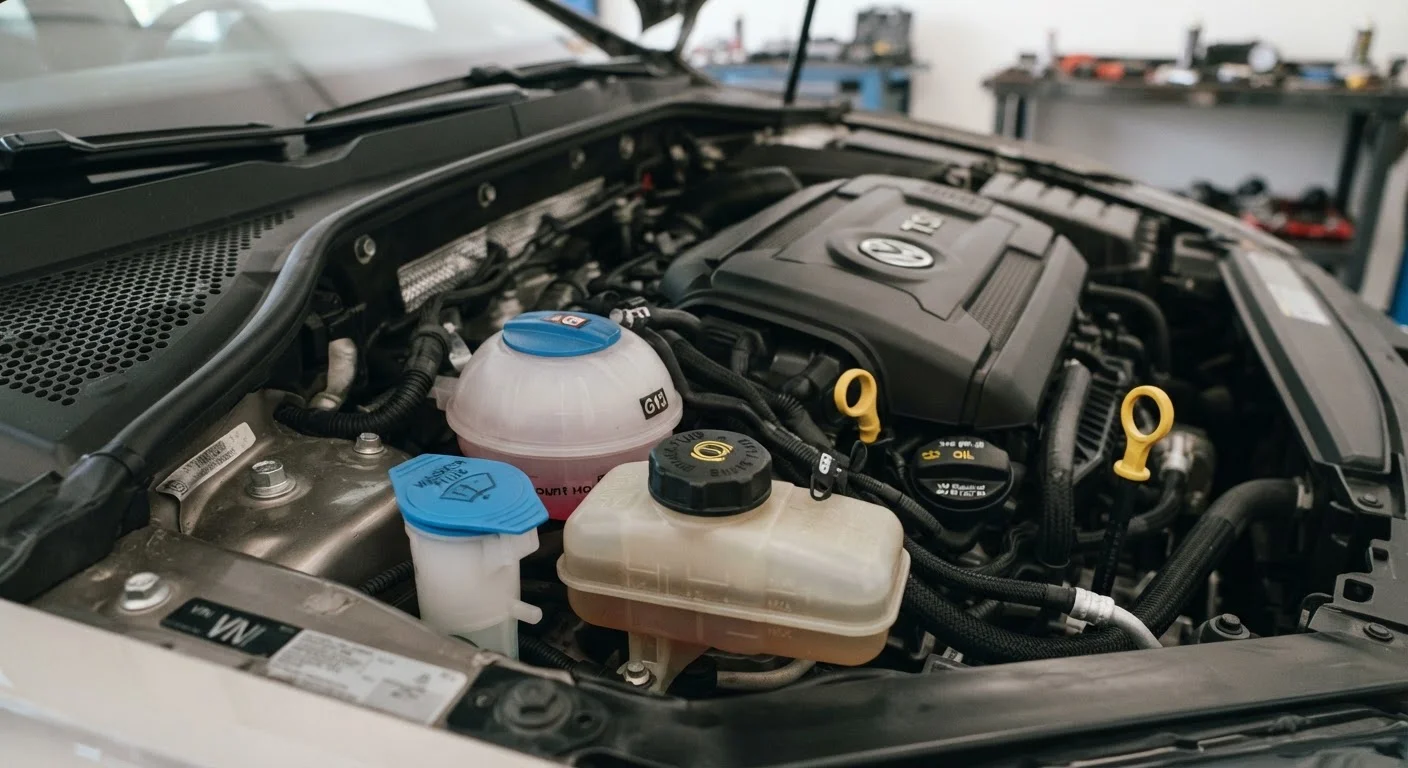
Motor oil lubricates the engine's moving parts, reduces friction, absorbs heat, and carries away microscopic contaminants. Check it monthly using the dipstick - the oil should fall between the min and max marks and appear amber to dark brown. Black, gritty oil or a consistently low level are signals to address promptly. For a deeper look at oil types, see our article on synthetic vs. conventional motor oil.
2. Engine Coolant (Antifreeze)
Coolant circulates between the engine and radiator to keep operating temperatures stable. Check the level in the translucent overflow reservoir when the engine is cold - never open the radiator cap on a hot engine, as pressurized coolant can cause serious burns. Low coolant or a milky appearance (which may indicate oil contamination) warrants a mechanic's inspection.
3. Brake Fluid
Brake fluid transmits the force of your foot on the pedal through the hydraulic braking system. It's stored in a small reservoir near the firewall. Because it absorbs moisture over time, degraded brake fluid can reduce stopping performance - a safety-critical concern. Learn how your braking system works to better understand why this fluid matters.
4. Transmission Fluid
This fluid keeps the transmission lubricated and cool. Some vehicles have a dipstick for checking it; others have sealed systems that require a shop visit. Signs of a problem include rough or delayed gear shifts, slipping, or a burning smell.
5. Power Steering Fluid
If your vehicle has hydraulic power steering, this fluid makes steering effort manageable. A whining noise when turning or stiff steering can signal a low or leaking reservoir. Many newer vehicles use electric power steering and don't require this fluid at all.
6. Windshield Washer Fluid
While not mechanical-critical, washer fluid directly affects visibility and safety. Use formulas rated for your climate - in freezing temperatures, standard water-based fluid can freeze in the lines.
Always Check Your Owner's Manual First
Fluid specifications vary significantly by make, model, and model year. Using the wrong type of transmission fluid, coolant, or brake fluid can cause damage. Your vehicle's owner's manual is the definitive reference for fluid types and service intervals - always consult it before adding or replacing any fluid.
Key Terms and Warning Signs
When dashboard warning lights illuminate - particularly the temperature, oil pressure, or brake system indicators - it often points back to a fluid issue. Our guide on what warning lights mean can help you interpret those signals accurately. Seasonal driving also affects fluid performance; see our seasonal car maintenance guide for temperature-specific tips.
~30%
Engine failures linked to low or dirty oil
Industry estimates suggest a significant share of premature engine wear is attributable to neglected oil maintenance.
2-3 years
Typical brake fluid service interval
Brake fluid absorbs moisture from the air over time, which can lower its boiling point and compromise braking performance.
50/50
Recommended coolant-to-water mix ratio
Most manufacturers recommend an equal blend of coolant and distilled water for optimal temperature regulation year-round.
This article is for general informational purposes only. Always consult your vehicle's owner's manual and a qualified mechanic for maintenance decisions specific to your car.