

| Peak bone mass window | Largely established by age 25 (National Institutes of Health, Office of Dietary Supplements) |
| Most common nutritional gap in U.S. adolescents | Calcium, Vitamin D, potassium, and fiber (Dietary Guidelines for Americans, 2020-2025) |
| Average U.S. adult fiber intake vs. recommendation | ~50% of recommended daily amount (Academy of Nutrition and Dietetics) |
| Vitamin B12 absorption concern | Increases in prevalence after age 50 due to reduced stomach acid (National Institutes of Health, Office of Dietary Supplements) |
| Folic acid recommendation | CDC advises 400 mcg daily for anyone who could become pregnant (Centers for Disease Control and Prevention) |
Why Nutritional Needs Change Throughout Life
The human body doesn't have a single, fixed set of nutritional requirements. Growth, hormonal shifts, metabolic changes, and health conditions all alter what the body needs - and in what amounts - at different points in life. Understanding these shifts helps you make food choices that genuinely support where you are right now, rather than following generic advice that doesn't account for age or life stage.
This overview covers key nutritional priorities from early childhood through older adulthood. It's intended as a reference, not a personal prescription. Always consult a registered dietitian or your healthcare provider before making significant changes to your or a family member's diet.
| Peak bone mass window | Largely established by age 25 (National Institutes of Health, Office of Dietary Supplements) |
| Most common nutritional gap in U.S. adolescents | Calcium, Vitamin D, potassium, and fiber (Dietary Guidelines for Americans, 2020-2025) |
| Average U.S. adult fiber intake vs. recommendation | ~50% of recommended daily amount (Academy of Nutrition and Dietetics) |
| Vitamin B12 absorption concern | Increases in prevalence after age 50 due to reduced stomach acid (National Institutes of Health, Office of Dietary Supplements) |
| Folic acid recommendation | CDC advises 400 mcg daily for anyone who could become pregnant (Centers for Disease Control and Prevention) |
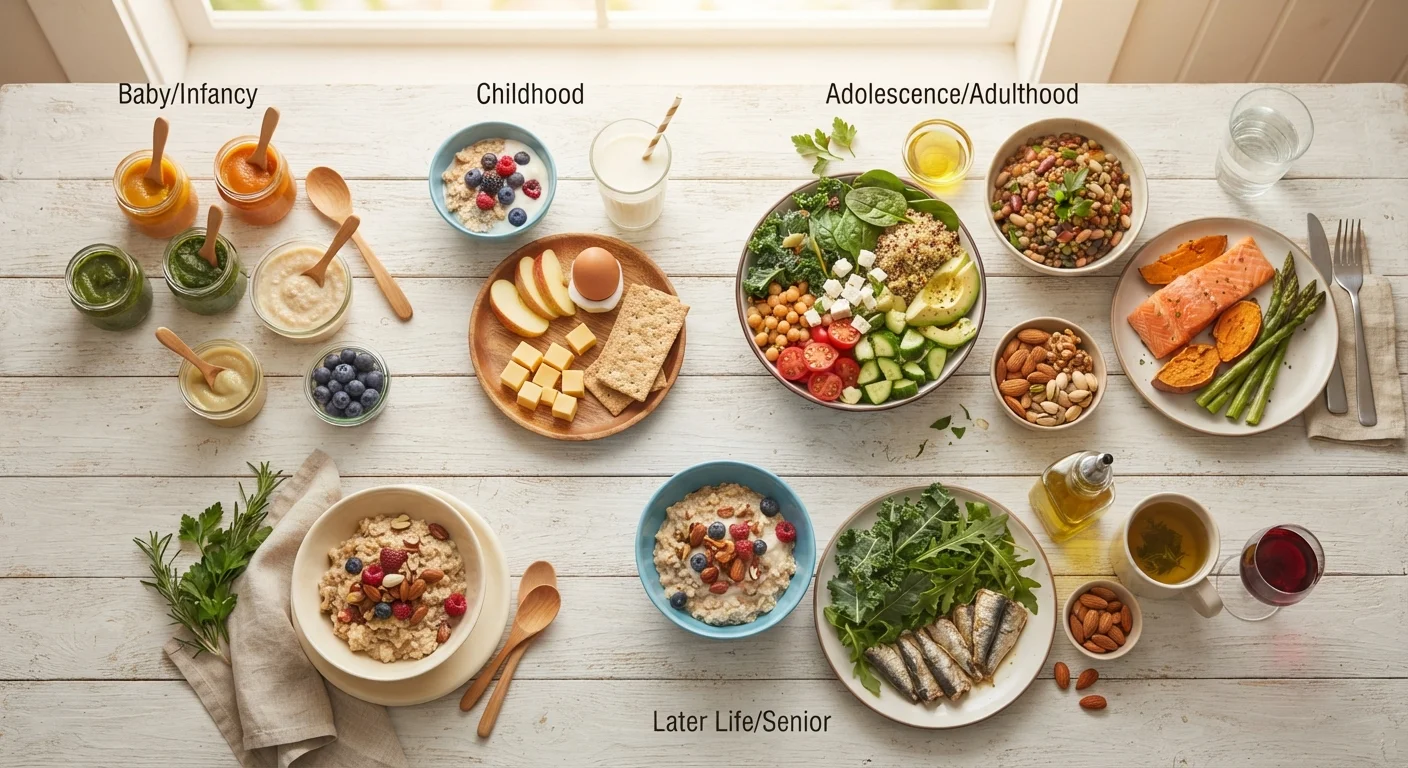
Childhood and Adolescence: Building the Foundation
From toddlerhood through the teenage years, the body is assembling bone density, muscle mass, and organ systems that will carry a person into adulthood. Several nutrients are especially critical during this window:
- Calcium and Vitamin D - Peak bone mass is largely built before age 25. Adequate intake of both nutrients during childhood and adolescence supports skeletal development and may reduce fracture risk later in life.
- Iron - Rapid growth increases iron demand. Adolescent girls face additional needs with the onset of menstruation. Iron-deficiency anemia is one of the most common nutritional gaps in this age group in the U.S.
- Protein - Supports muscle growth and tissue repair. Most children in the U.S. meet protein needs through a varied diet, though intake quality (whole food sources vs. processed) matters.
- Iodine - Essential for thyroid function and cognitive development, particularly in early childhood.
Common gaps in adolescents include calcium, vitamin D, potassium, and dietary fiber - largely because diets often skew toward processed foods low in fruits, vegetables, and dairy or dairy alternatives.
Sarcopenia
The gradual loss of muscle mass and strength associated with aging. It typically accelerates after age 50 and can affect mobility, metabolism, and overall health outcomes.
Nutrient density
A measure of how many vitamins, minerals, and other beneficial compounds a food provides relative to its calorie content. Foods high in nutrient density offer substantial nutritional value without excess calories.
Bioavailability
The proportion of a nutrient from food or supplements that the body is actually able to absorb and use. Bioavailability can vary based on food form, preparation method, and individual digestive health.
Dietary Reference Intake (DRI)
A system of evidence-based reference values used to plan and assess nutrient intakes for healthy individuals, established by the National Academies of Sciences, Engineering, and Medicine.
Neural tube defect
A birth difference affecting the brain or spinal cord that develops in the early weeks of pregnancy. Adequate folate intake before and during early pregnancy is associated with a reduced risk.
Adulthood: Maintaining What You've Built
Through the twenties, thirties, and forties, most people are maintaining rather than building. Caloric needs often stabilize or begin to decline slightly, while the importance of nutrient quality increases. Key priorities include:
- Folate (Vitamin B9) - Especially important for people of reproductive age. Adequate folate before and during pregnancy helps reduce the risk of neural tube defects. The CDC recommends a folic acid supplement for anyone who could become pregnant.
- Magnesium - Involved in hundreds of enzymatic processes, including blood sugar regulation and muscle function. Many American adults fall short of recommended intakes.
- Fiber - Supports gut health, cholesterol management, and blood sugar control. Most U.S. adults consume roughly half the daily recommended amount.
- Omega-3 fatty acids - Associated with cardiovascular and inflammatory health. Fatty fish, walnuts, and flaxseed are common dietary sources.
This is also a stage where dietary patterns established in childhood either pay dividends or create long-term risk. A nutrient-dense eating approach doesn't require expensive specialty foods - it centers whole grains, legumes, vegetables, lean proteins, and healthy fats.
~50%
Of recommended fiber intake consumed by average U.S. adult
According to the Academy of Nutrition and Dietetics, dietary fiber is among the most consistently under-consumed nutrients in the American diet.
Up to 30%
Decline in muscle mass possible between ages 40 and 80
Research published in journals on aging suggests sarcopenia can significantly affect physical function and metabolic health without adequate protein intake and activity.
1 in 5
U.S. adolescents estimated to have iron deficiency
The CDC has identified iron deficiency as one of the most prevalent nutritional deficiencies among U.S. children and adolescents, particularly teen girls.
Adults Over 50: Adapting to Changing Biology
After 50, several physiological changes directly affect nutritional needs. Muscle mass tends to decline (a process called sarcopenia), the gut absorbs certain nutrients less efficiently, and caloric requirements often decrease - meaning nutrient density per calorie becomes even more important.
- Protein - Older adults generally need relatively more protein to help preserve muscle mass, even as total caloric intake may decrease. Spreading protein intake across meals appears to support muscle protein synthesis more effectively than concentrating it in one sitting.
- Vitamin B12 - Absorption decreases with age due to reduced stomach acid production. The National Institutes of Health notes that many older adults may not absorb enough B12 from food alone, making supplementation or fortified foods relevant to discuss with a physician.
- Calcium and Vitamin D - Bone loss accelerates after menopause and continues with aging in all adults. Both nutrients remain essential; vitamin D needs often increase while skin synthesis becomes less efficient.
- Hydration - The sensation of thirst diminishes with age, raising dehydration risk even without obvious exertion.
For a related perspective on how physical activity intersects with these changes, see fitness guidance for adults over 50. For people managing chronic conditions, individualized dietary guidance from a healthcare provider or registered dietitian is especially important.
Special Populations Require Individualized Guidance
Pregnant individuals, people managing chronic conditions such as diabetes or kidney disease, and those on long-term medications have nutritional needs that go well beyond general life-stage guidelines. Nutrient requirements and restrictions in these situations can differ significantly. Always work with a registered dietitian or physician to develop a dietary approach appropriate for your specific health context.
Planning Ahead: From Awareness to Action
Understanding life-stage nutrition is most useful when it informs practical, sustainable choices - not when it drives anxiety or extreme changes. A few principles hold across all ages:
- Variety and whole-food emphasis tend to cover most nutritional bases without requiring precise tracking.
- Gaps are often more about food patterns than individual nutrients. Address the pattern first.
- Life transitions (pregnancy, menopause, a new diagnosis) are natural moments to revisit nutritional priorities with a qualified professional.
To turn this knowledge into a practical weekly routine, a grocery nutrition checklist can help you stock a kitchen aligned with your current stage of life.
This article is for general informational and educational purposes only and does not constitute medical or dietary advice. Nutritional needs vary by individual. Please consult a registered dietitian or qualified healthcare provider for guidance tailored to your health history and circumstances.