

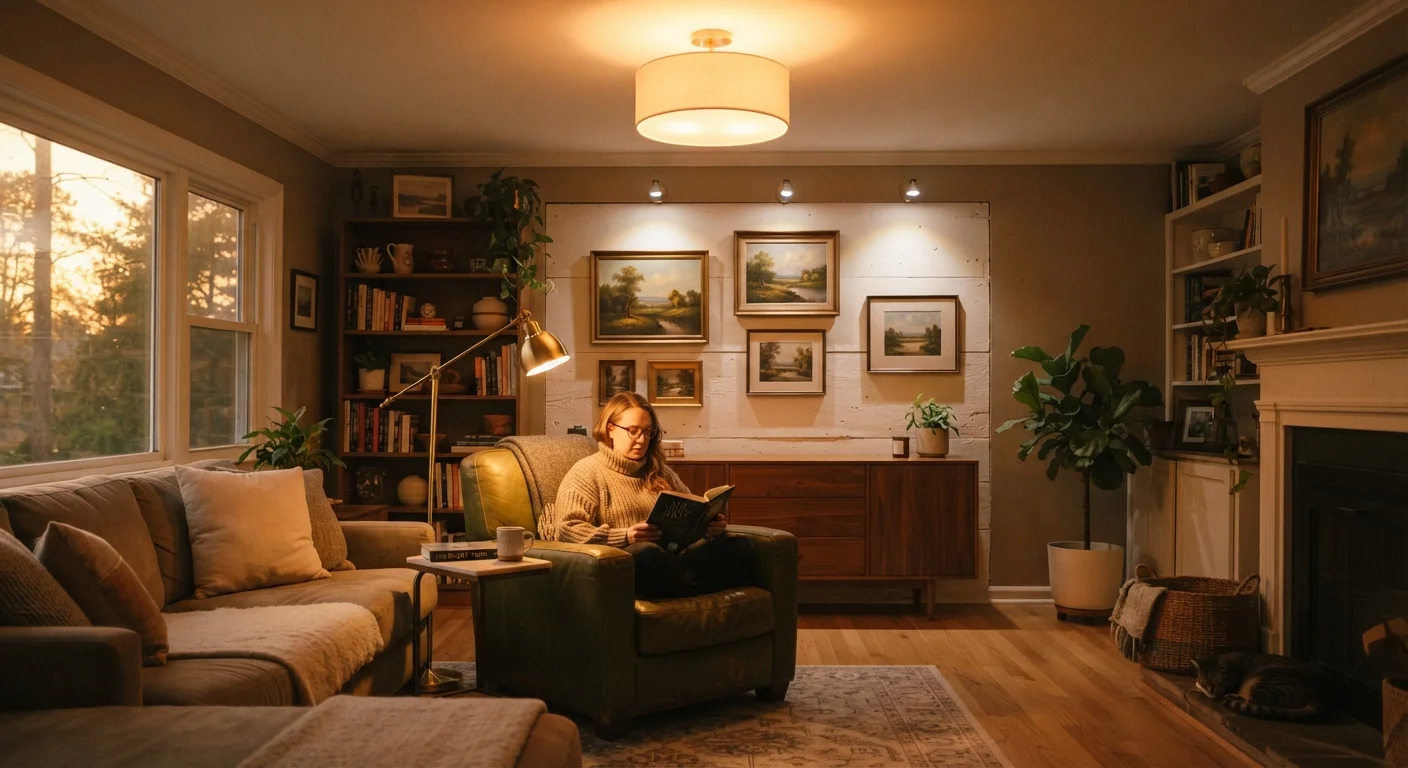
Key Takeaways
Lighting Layers
Lighting layers refers to the practice of using three distinct types of light in a single room - ambient, task, and accent - rather than relying on one overhead fixture to do all the work. Each layer serves a different purpose: general illumination, focused functional light, and decorative or highlighting effects. Together, they give a room depth, warmth, and flexibility.
In lighting design, this approach is sometimes called the 'three-layer system' and is a foundational principle in both residential and commercial interior design practice.
Why One Light Source Isn't Enough
Most rooms in American homes are wired for one overhead fixture per room. It's a practical choice for builders, but it creates a lighting problem that furniture and paint alone can't fix. A single source of light casts uniform illumination - no shadows, no highlights, no variation - and the result is a room that feels institutional rather than lived-in.
If you've ever walked into a beautifully furnished room and felt something was still off, lighting is often the culprit. As our guide to why rooms feel wrong explains, even well-decorated spaces can fall flat when the fundamentals of depth and visual interest aren't in place - and light is one of the most powerful tools for creating both.
The solution isn't a more expensive fixture. It's more types of fixtures working together.
Light Temperature Matters Too
Beyond fixture type, the color temperature of your bulbs shapes how each layer feels. Warm white (2700K-3000K) suits living rooms and bedrooms; neutral to cool white (3500K-5000K) works better in kitchens and workspaces. Keeping temperatures consistent across all three layers within a room produces a more cohesive result.
The Three Layers, Explained
Ambient Light: The Foundation
Ambient light is the base layer - the general illumination that lets you move safely through a room. Ceiling fixtures, recessed lights, and chandeliers typically provide this. It should be even and diffused rather than harsh. Think of it as the equivalent of natural daylight: present, but not doing all the heavy lifting.
Task Light: The Functional Layer
Task lighting is directed and purposeful. A lamp beside a reading chair, under-cabinet lighting in a kitchen, a sconce above a bathroom mirror - these fixtures put focused light exactly where an activity demands it. Without task lighting, people often compensate by cranking up ambient brightness, which makes the whole room feel overlit and uncomfortable.
Accent Light: The Finishing Layer
Accent lighting is what transforms a room from functional to visually interesting. Track lighting aimed at artwork, LED strips inside a bookcase, a small directional spotlight on a plant or architectural detail - these create contrast, shadow, and a sense of intentional design. The interplay of light and shadow is what gives a room its sense of dimension.
Understanding how accent choices interact with your wall colors is worth considering; how warm and cool paint tones interact with light can shift the entire mood of an accent effect.
~10%
Average share of home energy used for lighting
According to the U.S. Energy Information Administration, lighting accounts for roughly 10% of residential electricity consumption - making thoughtful fixture choices both a design and efficiency consideration.
3x
More light sources typical in well-designed rooms
Interior design professionals generally recommend at least three separate light sources per room as a baseline for achieving functional and atmospheric flexibility.
How to Start Layering Without a Full Renovation
You don't need an electrician or a big budget to begin. The most practical first step is an audit: stand in each room and identify which of the three layers is missing. Most rooms already have ambient light. Task and accent layers are usually where the gaps are.
- Add a floor or table lamp to any seating area lacking a dedicated reading or activity light.
- Use plug-in wall sconces to add wall-level warmth without hardwiring.
- Try LED puck lights or battery-powered tape lights inside shelving or under cabinets for low-commitment accent effects.
- Install dimmer switches on your existing ambient fixtures - this single change gives you immediate control over mood and makes every other layer work better.
Consider how lighting interacts with other design choices you're making. If you're exploring whether an accent wall works in your space, note that accent lighting can dramatically strengthen or soften that wall's visual impact.
Start With One Room, One Layer
Rather than overhauling every room at once, pick the space where you spend the most time and focus on adding whichever layer it's missing most - usually task or accent. Even one well-placed floor lamp or a set of shelf lights can immediately shift how a room feels. Build from there as your budget allows.
Common Mistakes That Keep Rooms Looking Flat
Even with the right fixtures, a few missteps can undercut the effect of layered lighting:
- Mismatched color temperatures
- Mixing a warm 2700K table lamp with a cool 5000K overhead bulb creates visual discord. Aim for consistency within a room, or shift intentionally - warmer for ambient, slightly cooler for task.
- Lights placed too high or too low
- A floor lamp in the corner adds little if its shade directs light toward the ceiling. Position fixtures so they light the surfaces and zones you actually use.
- Ignoring dimmers
- A fixed-brightness room can't shift between breakfast and a dinner party. Dimmer compatibility is worth checking before buying any new fixture or bulb.
- Accent lighting that overwhelms
- Accent light should draw the eye, not compete with everything else. One or two well-placed accent sources per room is usually more effective than many.
These principles complement the broader idea that restraint in design - including what you leave unlit - can be just as powerful.