

Key Takeaways
Why Mixing Styles Works - When Done Deliberately
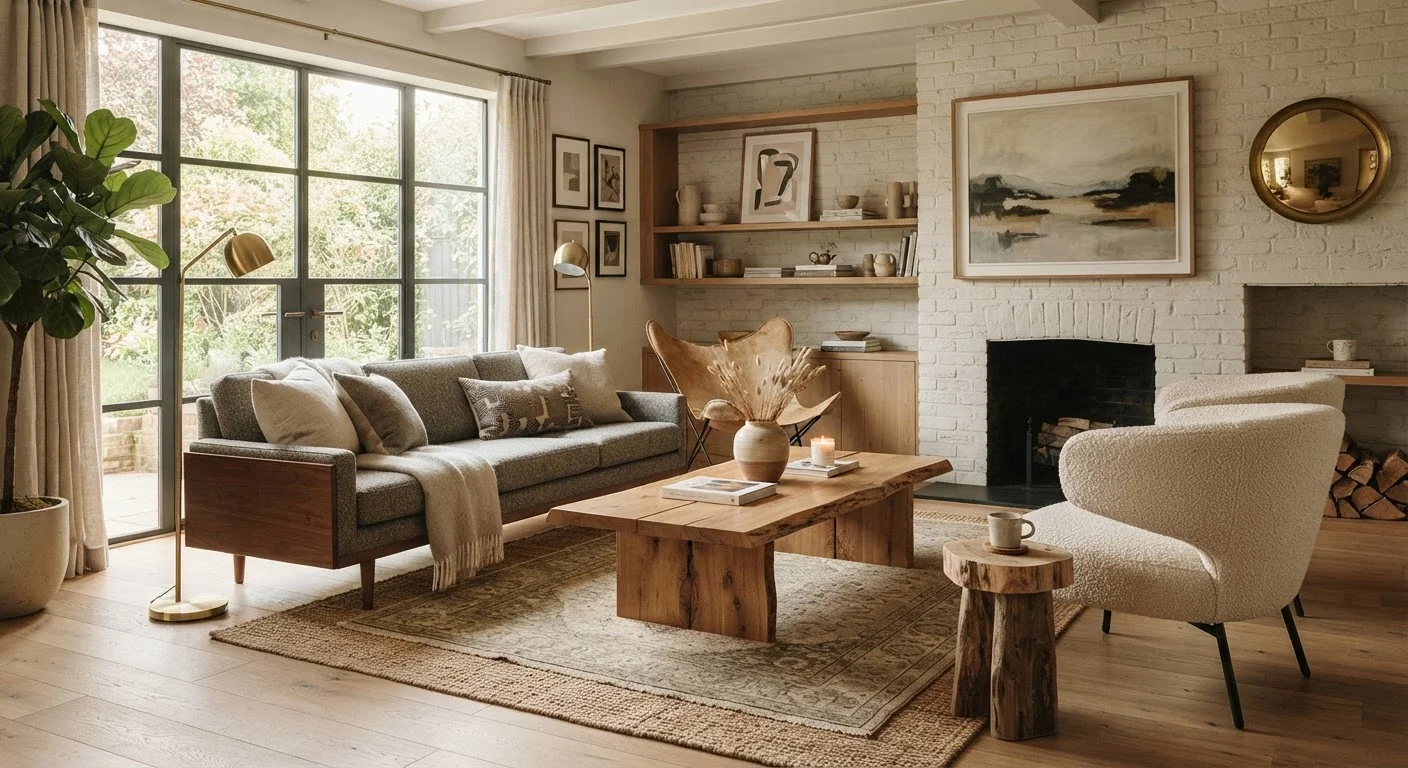
Perfectly matched furniture sets can make a room feel like a showroom floor: tidy but lifeless. Mixing styles, on the other hand, creates rooms that look collected over time - layered, personal, and genuinely interesting. The difference between a room that feels eclectic and one that feels chaotic usually comes down to intention.
Before diving into specific techniques, it helps to understand what you're working with. If you're not sure how to describe the styles you already own, our plain-English guide to interior design styles breaks down the most common categories in plain terms. Knowing whether a piece leans mid-century modern, industrial, or traditional gives you a framework for making deliberate choices rather than guessing.
The core principle: every piece in the room should feel like it belongs there on purpose, even if it arrived from three different decades.
The Practices That Hold a Mixed Room Together
These proven approaches give mixed-style rooms a sense of cohesion without requiring everything to match.
Anchor the room with one dominant style, then layer in accents from others.
When every piece competes equally for attention, the eye doesn't know where to rest. Choosing one style as the backbone - say, mid-century modern - gives the room a point of view. Secondary pieces from other styles then read as intentional contrast rather than confusion.
Establish a consistent color palette across all pieces.
Color is the most powerful unifying force in a mixed room. When disparate furniture shares even two or three colors, the eye perceives harmony regardless of style differences. A warm ivory, deep walnut, and muted terracotta can thread through pieces from completely different eras.
Repeat at least one material or finish throughout the room.
Materials work similarly to color: repetition creates visual continuity. Brass hardware, exposed oak, or matte black metal appearing in at least two or three places gives the room a rhythm that makes the overall mix feel considered.
Vary scale and height deliberately, not randomly.
A room where every piece sits at the same height feels flat. Mixing a tall bookcase with a low sofa and a mid-height accent chair creates visual movement. The key is doing this on purpose - ensuring the variation reads as rhythm, not imbalance.
Limit active style mixing to two or three distinct aesthetics.
Each style you add multiplies the number of visual decisions the viewer's eye must make. Two or three styles handled well feel curated. Four or more, especially without strong unifying elements, start to feel like a storage unit.
Quick Wins You Can Apply Today
You don't need to redecorate to start pulling a mixed room together. These small moves make a measurable difference.
For deeper context on why a room might still feel off despite your best efforts, this look at foundational design principles explains the underlying concepts clearly.
Common Misconceptions Worth Dropping
One of the biggest mental blocks for homeowners is the fear of breaking rules. The truth is, many design "rules" are more flexible than they seem. The same way that persistent interior design myths around matching metals or matching wood tones don't hold up under scrutiny, the idea that furniture must come from the same era is largely unfounded.
Matching Wood Tones: More Flexible Than You Think
A common concern is whether all the wood in a room needs to match. In practice, two or three different wood tones can coexist well when they share a similar warmth or undertone - all warm honey tones, or all cooler ash-gray tones, for instance. The problem usually isn't mixing wood species; it's mixing warm and cool tones without intention. If you're unsure, understanding warm versus cool undertones can help you make sense of how tones interact.
What actually matters is that the room feels resolved - that there's a sense of visual logic even if you can't immediately articulate it. The elements that make a room feel finished often have less to do with matching styles and more to do with scale, light, and layering.