

Key Takeaways
A "Finished" Room
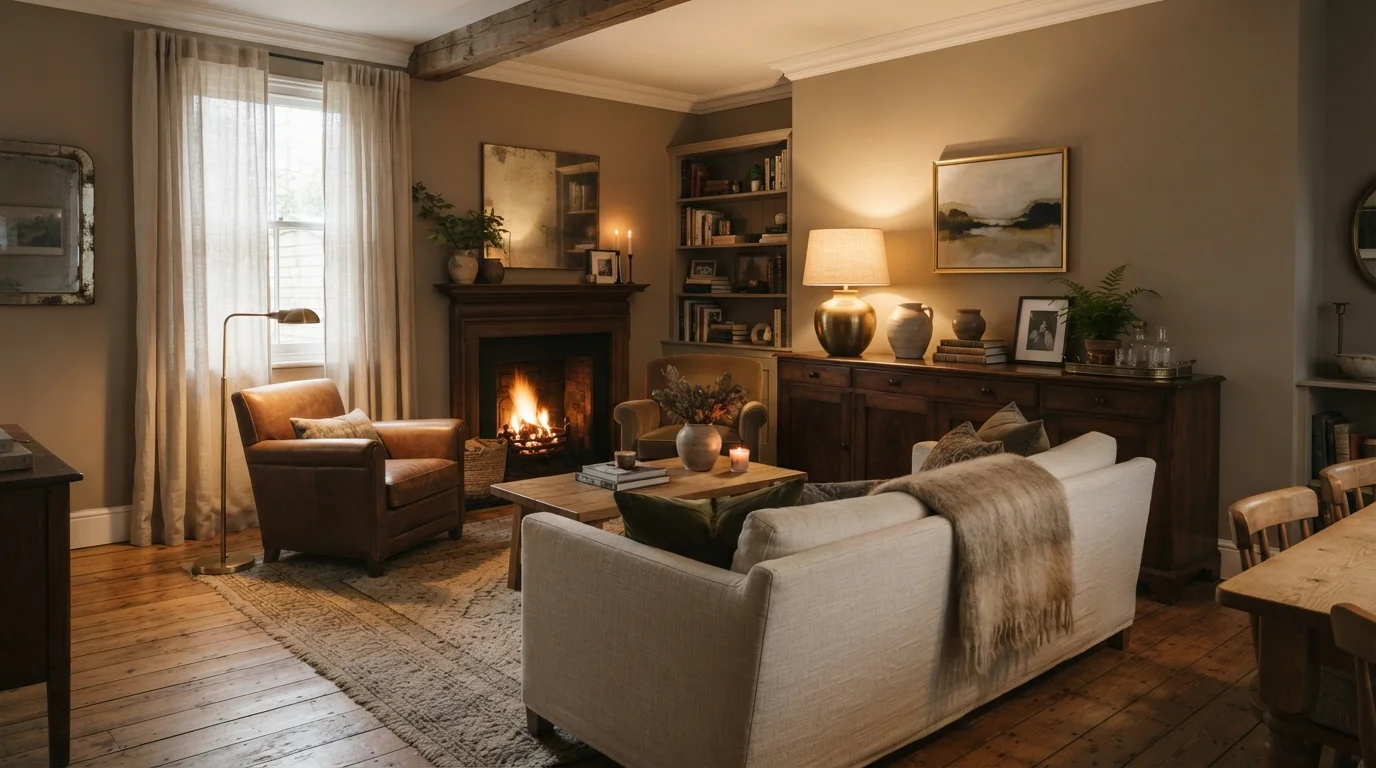
A finished room is one where every element - furniture, lighting, color, texture, and accessories - works together to create a coherent, comfortable space. It doesn't mean expensive or fully decorated; it means nothing feels out of place or conspicuously missing. Most people recognize a finished room immediately but struggle to articulate what makes it feel that way.
In interior design, this quality is often described as visual harmony - achieved through principles like scale, balance, rhythm, and layering rather than any single decorating choice.
Scale and Proportion: The Invisible Architecture of a Room
Before color, before accessories, before anything else - scale determines whether a room feels right. A sofa that's too petite for a large living room makes the entire space feel underfurnished. A dining table that crowds its chairs reads as cramped. Getting scale right means matching the visual weight of your furniture to the actual dimensions of the room.
Proportion works alongside scale: it's the relationship between the pieces themselves. A towering bookcase next to a low-slung sofa creates visual tension. A pair of nightstands that match the bed's height feels resolved. You don't need to measure everything obsessively - but you do need to stand back and ask whether things feel balanced together.
If a room consistently feels off despite good individual pieces, foundational design principles around balance and rhythm are worth revisiting before adding anything new.
Test Scale Before You Buy
Use painter's tape on the floor to mock up the footprint of any large furniture piece before purchasing. This low-effort step reveals scale problems - a sofa that seemed fine in a showroom may overwhelm your actual living room dimensions. It also helps you evaluate traffic flow before anything is delivered.
Lighting: The Element Most Rooms Get Wrong
A single overhead light fixture is a starting point, not a finished lighting plan. Rooms that feel warm, layered, and inviting almost always have multiple light sources operating at different heights: a floor lamp in a corner, table lamps flanking a sofa, perhaps under-cabinet lighting or wall sconces. This layering creates depth that no ceiling fixture can provide alone.
The three categories to think about are ambient (general illumination), task (focused light for reading, cooking, or working), and accent (light used to highlight artwork, architectural features, or decorative objects). Most rooms only use one. Using all three changes how the space feels at different times of day and gives occupants real control over atmosphere.
For a practical walkthrough of how these layers work together, our article on lighting layers and room atmosphere covers the concept in depth.
68%
Homeowners dissatisfied with room lighting
According to a Houzz survey on home improvement priorities, lighting consistently ranks among the top renovation regrets for homeowners who decorated without professional guidance.
3-4
Distinct light sources in a well-layered room
Interior design educators generally recommend combining at least three types of lighting - ambient, task, and accent - for a room to feel complete and adaptable.
Texture and Color: Creating Depth Without Complexity
A room with consistent color but no textural variation tends to feel flat. Texture is what gives a space its tactile richness - the difference between a room that reads as a photograph and one that feels livable. Rough linen against a smooth leather sofa. A jute rug beneath a glass coffee table. A chunky knit throw on a sleek upholstered chair. These contrasts don't require a redesign; they're often achievable with a few intentional additions.
Color works differently: the goal isn't a matching set but a coherent palette. A dominant color (usually walls or a large upholstered piece), a secondary color (rugs, curtains, accent chairs), and one or two accent tones creates the kind of harmony that feels deliberate without being rigid. If you're curious about how mixing styles interacts with color choices, our guide on mixing furniture styles intentionally addresses when variety works and when it doesn't.
Not Every Design Rule Applies Universally
Many widely repeated guidelines - like 'small rooms need light colors' or 'never mix metals' - are more flexible than they sound. Context, lighting conditions, and personal intent all affect whether a given rule applies. Our article on persistent interior design myths examines which rules hold up and which are worth questioning.
Rugs, Art, and Accessories: Grounding and Completing the Space
A rug does more than cover a floor - it defines a zone. In a living room, the rug should be large enough that at least the front legs of every major seating piece rest on it. This visually ties the grouping together and signals that the arrangement was intentional. A rug that's too small floats underneath a coffee table like an afterthought and makes surrounding furniture look disconnected.
Artwork and wall decor follow a similar logic. Planning a gallery wall before hanging anything prevents the common mistake of pieces placed too high, too far apart, or without a unifying visual logic. Art hung at eye level (roughly 57-60 inches to center) tends to feel grounded; art hung near the ceiling tends to feel disconnected from the room's furniture.
Finally, restraint matters. Intentional negative space - on shelves, on walls, on surfaces - allows the pieces you do display to register as considered choices rather than clutter. The impulse to fill every surface is natural, but editing down often yields a more finished result than adding more.
This article is for informational and educational purposes only. Design outcomes vary based on individual rooms, budgets, and personal preferences. Consult a professional interior designer for tailored guidance on significant renovation or decorating decisions.