

Key Takeaways
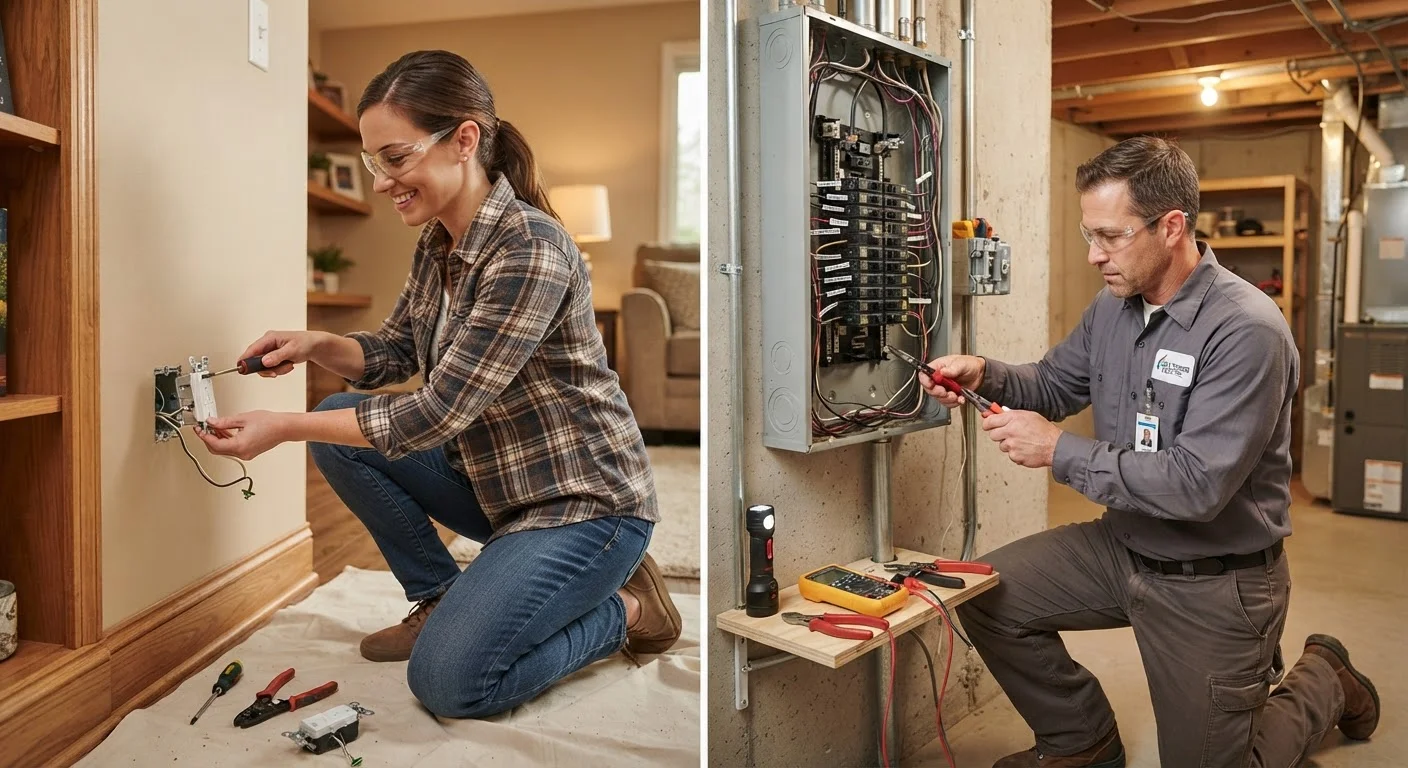
Option A
DIY Electrical Work
The empowered homeowner approach for low-risk, code-compliant tasks.
Best for: Straightforward, surface-level tasks like replacing outlets, switches, or light fixtures on existing circuits.
Option B
Licensed Electrician
The professional, code-backed solution for complex or hazardous electrical work.
Best for: Panel upgrades, new circuit installation, whole-home rewiring, and any work requiring a permit.
If you want to replace a standard outlet, switch, or light fixture
DIY Electrical Work
These are surface-level tasks on existing circuits. With power safely shut off at the breaker and basic knowledge of wire connections, most homeowners can complete these confidently.
If you need to add a new circuit, upgrade your panel, or install a subpanel
Licensed Electrician
This work involves your home's main electrical system, almost always requires a permit, and carries serious shock and fire risk if done incorrectly.
If your home has aluminum wiring, a Federal Pacific panel, or wiring older than 40 years
Licensed Electrician
Aging or legacy electrical systems present specific hazards that require professional evaluation before any work - even seemingly minor work - is performed.
If you're finishing a basement, adding a garage workshop, or running outdoor circuits
Licensed Electrician
New circuit runs in any space typically require permits, inspections, and adherence to NEC code requirements that are best handled by a licensed professional.
Why the DIY vs. Pro Distinction Matters in Electrical Work
Electrical work sits in a different category from painting a room or swapping out cabinet hardware. Get it wrong and the consequences aren't just cosmetic - they can include house fires, electrocution, failed home inspections, or voided insurance coverage. That doesn't mean every electrical task is off-limits for a capable homeowner. It means the distinction between what's appropriate to DIY and what requires a licensed electrician is worth understanding clearly.
For a broader look at how this applies across home repair categories, see our guide on where safe and risky DIY repairs diverge. Electrical work follows the same general logic but with higher stakes.
| Criterion | DIY Electrical Work | Licensed Electrician |
|---|---|---|
| Typical tasks | Outlets, switches, fixtures, GFCI reset | Panel work, new circuits, rewiring, permits |
| Permit usually required | Rarely (varies by jurisdiction) | Almost always for major work |
| Inspection required | Typically no | Yes, for permitted work |
| Skill level needed | Basic; follows existing wiring | Licensed training and code knowledge |
| Insurance implications | Low risk if done correctly, within scope | Protected when properly permitted |
| Risk if done wrong | Shock, outlet failure, minor fire risk | N/A - licensed work reduces systemic risk |
What Homeowners Can Reasonably Handle
Several electrical tasks fall within the skill range of a careful, informed homeowner - provided the power is turned off at the breaker box and verified with a non-contact voltage tester before touching anything.
- Replacing a standard outlet or switch: Swapping a like-for-like outlet or toggle switch on an existing circuit is one of the most common DIY electrical tasks. The wire connections are straightforward, and no new wiring is involved.
- Replacing a light fixture or ceiling fan: As long as an existing electrical box is rated for the load and a fan-rated box is used for ceiling fans, this is generally DIY-appropriate.
- Installing a smart switch or dimmer: These replace existing switches and are well within DIY territory, though it's important to confirm your wiring includes a neutral wire if required by the device.
- Resetting a tripped GFCI outlet: GFCI (Ground Fault Circuit Interrupter) outlets have test and reset buttons. Resetting one that has tripped - and testing that it works - requires no tools at all.
The key boundary: DIY electrical work should stay within existing circuits and involve device replacement, not new wiring or load additions. Even within these tasks, check your local code - some jurisdictions require permits for any electrical work, regardless of scope.
Always Verify with Your Local Code Authority
Electrical code requirements in the United States are based on the National Electrical Code (NEC), but individual states and municipalities adopt different versions and add local amendments. What's permitted as a DIY task in one county may require a licensed contractor in another. Before starting any electrical project, confirm the rules with your local building or permits department - a quick phone call can save significant trouble later.
Where a Licensed Electrician Is Required
Certain electrical projects cross into territory that's regulated, dangerous, or both. These are not suggestions - in most jurisdictions, performing this work without a license is illegal, and insurance companies may deny claims for damage stemming from unpermitted electrical work.
~51,000
Home electrical fires per year in the U.S.
According to the U.S. Fire Administration, electrical fires account for a significant share of residential structure fires annually.
~400
Electrocution deaths annually in U.S. homes
The Electrical Safety Foundation International (ESFI) reports several hundred non-occupational electrocution fatalities occur in the U.S. each year.
- Panel upgrades and replacements: Your main electrical panel is the heart of your home's electrical system. Touching it without a license - and typically a permit - is prohibited in most states.
- Adding new circuits: Running new wire from the panel to serve a room addition, dedicated appliance circuit, or EV charger requires permits, inspections, and licensed work in virtually all jurisdictions.
- Whole-home rewiring: Older homes with knob-and-tube or deteriorated wiring need professional rewiring - a complex job that also requires permits and inspections at multiple stages.
- Outdoor and underground wiring: Work involving weatherproof conduit, outdoor panels, or buried lines has specific code requirements around materials, burial depth, and GFCI protection.
- Service entrance and meter work: The wires running from the utility to your meter and into your panel are always utility and licensed-electrician territory. Never touch them.
If you notice warning signs like flickering lights, warm outlets, or frequently tripping breakers, stop DIYing immediately. Our article on signs your electrical system needs a professional inspection explains what these symptoms may indicate.
Permits, Inspections, and What Happens If You Skip Them
Permits aren't bureaucratic nuisances - they're the mechanism by which a municipal inspector confirms that work meets the National Electrical Code (NEC) and local amendments. When you pull a permit, an inspection follows. That inspection catches mistakes before walls are closed up and before a hazard becomes invisible.
Skipping permits carries real consequences. Unpermitted work discovered during a home sale can derail closing or force you to remediate at your own expense. Homeowner's insurance may deny fire or damage claims if the damage is traced to unpermitted electrical work. And in some jurisdictions, you may be required to tear out finished walls to expose unpermitted wiring for retroactive inspection.
Before any electrical project - even one you plan to DIY - contact your local building department to confirm whether a permit is required. Requirements vary meaningfully by municipality. When the project does require a licensed electrician, our guide on questions to ask before hiring a contractor will help you vet the right professional.
This article is for general informational purposes only and does not constitute legal, safety, or electrical advice. Always consult your local building authority and a licensed electrician for guidance specific to your home and jurisdiction.