

Key Takeaways
Our Verdict
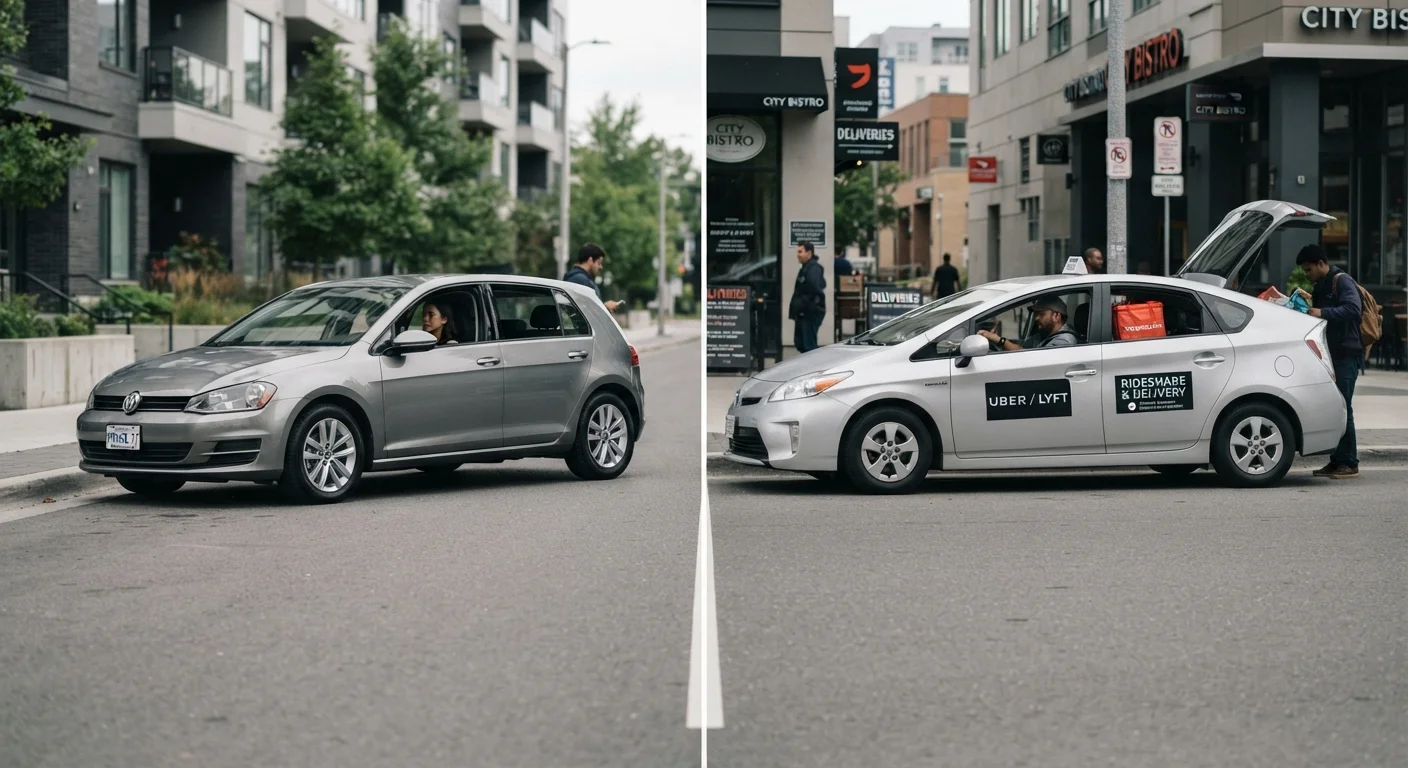
For purely personal driving, a standard personal auto policy is the appropriate baseline. Once a vehicle is regularly used to generate income - hauling passengers, making deliveries, or visiting clients - that personal policy likely won't respond to a claim arising from those activities. The right solution depends on the type and frequency of business use, ranging from a simple rideshare endorsement to a dedicated commercial auto policy.
| Best for | Recommended |
|---|---|
| Drivers who only use their vehicle for personal errands and commuting | Personal Auto Policy |
| Rideshare drivers using platforms like Uber or Lyft part-time | Rideshare Endorsement added to a personal policy |
| Delivery drivers, contractors, or anyone regularly transporting goods for pay | Commercial Auto Policy |
| Small business owners whose employees also drive the same vehicle | Commercial Auto Policy |
Why the Distinction Matters
Most drivers assume their auto insurance follows them everywhere. In practice, insurers underwrite personal policies based on personal-use risk - occasional commuting, weekend trips, routine errands. When a vehicle starts generating income, the risk profile changes significantly, and most personal policies contain explicit exclusions for that shift.
This isn't fine print designed to confuse policyholders. It reflects a genuine actuarial difference: a car driven 40,000 miles a year for deliveries faces different accident exposure than one driven 12,000 miles for commuting. The insurer priced your premium around one scenario; using the vehicle for the other without disclosure creates a coverage gap that can leave you responsible for damages out of pocket.
To understand the full structure of what your policy actually covers, see this plain-language breakdown of auto policy terms.
A Denied Claim Can Be Costly
If you're in an accident while driving for a delivery app or rideshare platform without appropriate coverage, your personal insurer may deny the claim entirely. That means medical bills, vehicle repair costs, and liability for any third-party damages could fall to you directly. State minimum liability limits are rarely enough to cover a serious accident - making undisclosed business use a significant financial risk.
What Personal Auto Insurance Covers - and Where It Stops
A standard personal auto policy covers liability, and typically collision and comprehensive, for driving that is personal in nature. Commuting to a single employer is generally included. The coverage stops - or becomes contestable - in several common situations:
- Rideshare driving: The period between accepting a ride request and completing it often falls into a gap not covered by either your personal policy or the platform's insurance.
- Delivery services: Using your car to deliver food, packages, or groceries for pay typically triggers the business-use exclusion in most personal policies.
- Client visits or sales calls: Regularly driving to client sites as part of a job - particularly if mileage is reimbursed - may constitute business use under your policy's definitions.
- Transporting equipment or goods for a business: Even if you own the business, hauling tools or merchandise can shift classification.
Your declaration page lists the coverages you're paying for - but the exclusions section in the full policy document is where business-use restrictions are spelled out. Reading both is essential.
Check Your Policy's Definition of 'Business Use'
Policy language varies significantly. Some insurers define business use broadly - including any driving where you're compensated - while others have narrower definitions. Before assuming you're covered (or not), locate the exclusions section of your actual policy document and read how your insurer defines 'commercial,' 'business,' or 'for-hire' use. When in doubt, ask your agent in writing so you have documentation of their answer.
Personal vs. Commercial Auto: A Direct Comparison
The table below summarizes how personal and commercial auto policies generally differ across key factors. Actual terms vary by insurer and state - always confirm specifics with a licensed agent.
| Personal Auto Policy | Commercial Auto Policy | |
|---|---|---|
| Primary use covered | Personal errands, commuting, leisure | Business transport, deliveries, client visits |
| Rideshare/delivery coverage | Typically excluded; endorsement may help | Covered if policy is structured for it |
| Liability limits available | Standard consumer limits | Higher limits available for business exposure |
| Multiple drivers covered | Household members listed | Employees and named drivers can be included |
| Premium cost (general range) | Lower for personal-use drivers | Higher, reflecting greater business-use risk |
| Suitable for | Individuals driving for personal purposes | Business owners, contractors, gig workers |
Filling the Gap: Endorsements and Commercial Policies
Not every business use requires a full commercial policy. Insurers offer a spectrum of options:
- Rideshare endorsements
- Added to an existing personal policy, these fill the gap period (app on, no passenger yet) that neither the personal policy nor the platform's coverage typically addresses. They are relatively affordable and widely available.
- Business-use endorsements
- For drivers who occasionally visit clients or use the vehicle for light business purposes, some insurers offer an endorsement that extends personal coverage to business use without a full commercial policy.
- Commercial auto policies
- Designed for vehicles used primarily or exclusively for business. These policies can cover higher liability limits, multiple drivers, and business-specific risks. They are generally more expensive but provide the appropriate foundation for regular business use.
If you're also evaluating how business use affects overall insurance costs, usage-based auto insurance is another option worth understanding - though it comes with its own trade-offs.
When comparing any of these structures, go beyond the premium. A practical checklist of coverage limits and exclusions can help you evaluate policies more completely.
What to Do If Your Use Has Changed
If you've started driving for a rideshare platform, taken on delivery work, or begun using your car regularly for client visits, the practical step is straightforward: contact your insurer or a licensed agent and describe how you're using the vehicle. They can tell you whether your current policy covers those activities and what options are available to close any gaps.
Failing to disclose a material change in vehicle use can give an insurer grounds to deny a claim - even for an accident that happens during what looks like personal driving. This is not a technicality to gamble on; the financial exposure from an at-fault accident without valid coverage can be substantial.
For a broader look at how different coverage types interact, collision vs. comprehensive is a useful companion read. And if you're evaluating your overall policy structure, see liability vs. full coverage for context on how those decisions interact with business use.
This article is for general informational purposes only and does not constitute personalized insurance, legal, or financial advice. Coverage terms, exclusions, and regulations vary by insurer and state. Consult a licensed insurance agent or adviser for guidance specific to your situation.