

Key Takeaways
Start here
Why Men's Skin Needs Attention
Core skills
The Three Non-Negotiables
Apply it
Building a Routine That Sticks
Avoid pitfalls
Common Missteps to Avoid
Level up
When to Go Further
Why Men's Skin Needs Attention
There's a persistent idea that skincare is a women's domain. It isn't - and the biology backs that up. Men's skin is on average about 25% thicker than women's, with higher collagen density and greater sebum (oil) production due to higher androgen levels. Daily shaving also creates repeated mechanical irritation that most people who've never experienced it don't account for.
None of this makes men's skin tougher in the long run. Sun damage, environmental pollution, and the natural breakdown of collagen over time affect everyone equally. The difference is that men, on average, are less likely to have been taught the basic habits that slow that process down. That gap is what this guide is here to close.
For a broader look at self-care habits that often go untaught, see these commonly skipped personal care steps - many apply directly to skin health.
Sebum
The natural oil produced by glands in the skin. It helps protect and lubricate skin, but excess sebum can contribute to oiliness and breakouts.
Skin barrier
The outermost layer of skin that acts as a protective shield, locking in moisture and keeping out irritants. Harsh cleansers or over-washing can damage it.
Non-comedogenic
A label term meaning the product is formulated to avoid clogging pores - a useful trait to look for in moisturizers if you're prone to breakouts.
SPF
Sun Protection Factor - a measure of how well a product blocks UVB rays, the primary cause of sunburn and a significant contributor to skin aging and cancer risk.
pH balance
A measure of acidity or alkalinity. Healthy skin has a slightly acidic pH; products with a very different pH can disrupt the skin barrier and cause irritation.
The Three Non-Negotiables
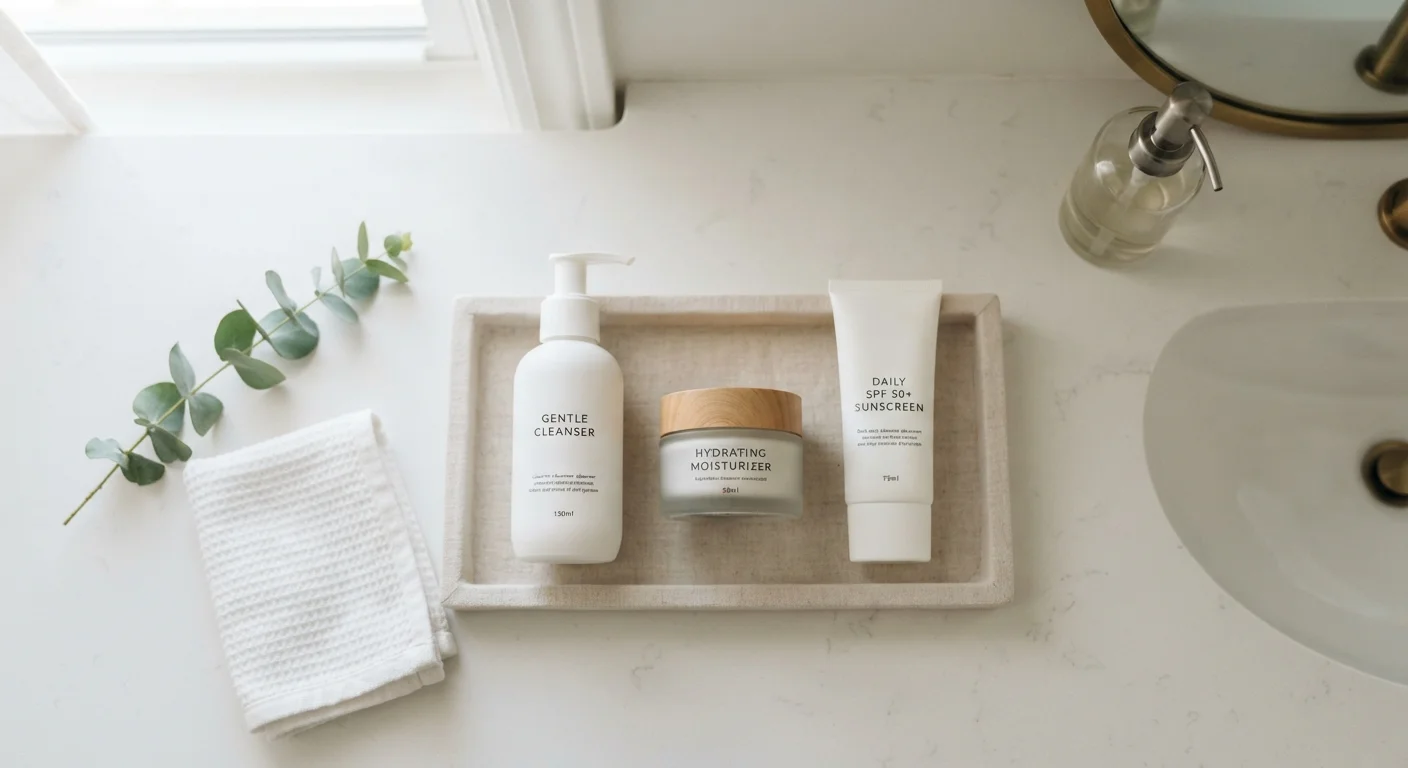
You don't need a ten-step routine. Three steps, done consistently, will deliver the majority of the benefit:
1. Cleansing
Washing your face removes sweat, excess oil, environmental pollutants, and dead skin cells that accumulate throughout the day. Use a gentle, pH-balanced facial cleanser - not bar soap or body wash, which can be too harsh for facial skin. Lukewarm water works best; hot water strips moisture from the skin barrier.
2. Moisturizing
Even oily skin needs hydration. A moisturizer reinforces the skin's barrier function, helping it retain water and stay resilient. If you shave, applying moisturizer after reduces post-shave irritation noticeably. Look for the term non-comedogenic on the label, which means the formula is designed not to clog pores.
3. Sun Protection
This is the step most men skip - and it's the one with the clearest long-term impact. UV exposure is the leading external cause of premature skin aging and increases skin cancer risk. A daily SPF 30 or higher, applied every morning, is the single most evidence-backed thing you can do for your skin over a lifetime. Many moisturizers now include SPF, which keeps the step count low.
The Two-Product Shortcut
If you want the simplest possible starting point, a gentle cleanser and a moisturizer with SPF 30+ already built in covers all three non-negotiable steps in just two products. Once that habit is consistent, you can decide whether adding anything else makes sense for your skin.
Building a Routine That Sticks
The best routine is the one you'll actually follow. Complexity is the enemy of consistency. A realistic starting point looks like this:
- Morning: Rinse or cleanse → moisturizer with SPF
- Evening: Cleanse → moisturizer (SPF optional at night)
That's it. Two minutes, twice a day. The practices that keep a skincare routine consistent are largely the same regardless of gender - habit stacking (pairing your routine with something you already do, like brushing your teeth) is one of the most effective strategies.
If you want a more structured walkthrough of exactly how to sequence products, this beginner's guide to building a skincare routine from scratch walks through each step in detail.
Common Missteps to Avoid
Starting from scratch means it's easy to pick up habits that feel right but actually work against you. A few of the most common:
- Over-washing: Washing more than twice a day - especially with harsh soap - disrupts the skin barrier and can increase oil production as the skin tries to compensate.
- Skipping moisturizer because skin feels oily: Dehydrated and oily are not mutually exclusive. Skipping moisturizer often makes oiliness worse over time.
- Treating all products the same: Body wash, hand soap, and face wash serve different functions. Facial skin is more sensitive and has a different pH balance.
- Stopping when skin looks fine: Skincare's biggest benefits - UV protection, maintained moisture barrier - are preventive. They're less visible than the problems you're avoiding.
Don't Self-Diagnose Persistent Skin Issues
Chronic acne, unusual dryness, redness, or any new or changing spots on your skin deserve professional attention. A basic grooming routine is maintenance - not treatment. When something doesn't look or feel right, a dermatologist is the right call.
For a deeper look at what's actually in the products you're using, this guide to reading skincare ingredient lists demystifies the label without requiring a chemistry degree.
When to Go Further
Once the basics feel automatic, it's reasonable to explore additions like an exfoliant (used once or twice a week to remove dead skin cells) or a targeted serum for specific concerns like uneven tone. But these are genuinely optional at the beginner stage.
What's not optional is seeing a dermatologist if you notice anything that concerns you - persistent acne, changing moles, chronic irritation that doesn't respond to basic care. A simple daily routine is general maintenance; it doesn't replace professional evaluation for anything that warrants it.
For those who want to build out a more complete personal care approach beyond just skin, this guide to a minimal personal care kit covers the other core categories without overcomplicating things. And the broader Personal Care hub is a useful reference as your routine evolves.
This article is for general informational purposes only and does not constitute medical or dermatological advice. Consult a qualified healthcare professional or licensed dermatologist for concerns specific to your skin or health.