

| Most common workplace code | Business Casual (Widely reported across HR and workplace surveys) |
| Codes from most to least formal | Black Tie → Business Formal → Business Professional → Business Casual → Smart Casual → Casual |
| Default safe choice when unsure | Dress one level above the stated code |
| Key distinction: Business vs. Smart Casual | Business casual avoids jeans; smart casual often allows dark, clean denim |
Why Dress Codes Feel So Confusing
Dress codes have always carried a degree of ambiguity, but the post-pandemic blending of work and social environments has made them genuinely harder to decode. Terms like business casual and smart casual can mean different things depending on the industry, region, and even the specific company. Rather than memorizing rigid rules, the goal here is to understand the intent behind each code - then dress accordingly with what you already own.
Some style rules are worth bending, but dress codes tied to professional settings still carry real social weight. Getting them right signals respect for the occasion and the people hosting it.
| Most common workplace code | Business Casual (Widely reported across HR and workplace surveys) |
| Codes from most to least formal | Black Tie → Business Formal → Business Professional → Business Casual → Smart Casual → Casual |
| Default safe choice when unsure | Dress one level above the stated code |
| Key distinction: Business vs. Smart Casual | Business casual avoids jeans; smart casual often allows dark, clean denim |
The Main Dress Codes, Defined
Here's a plain-language breakdown of the most common dress code terms you'll encounter:
Business Formal
The most structured dress code. Think tailored suits, ties for men, and conservative dresses or suits for women. Typically reserved for executive meetings, courtrooms, and formal ceremonies.
Business Professional
A step below formal but still highly polished. Suits and blazers are expected; ties are common but not always mandatory. Colors stay neutral or muted.
Business Casual
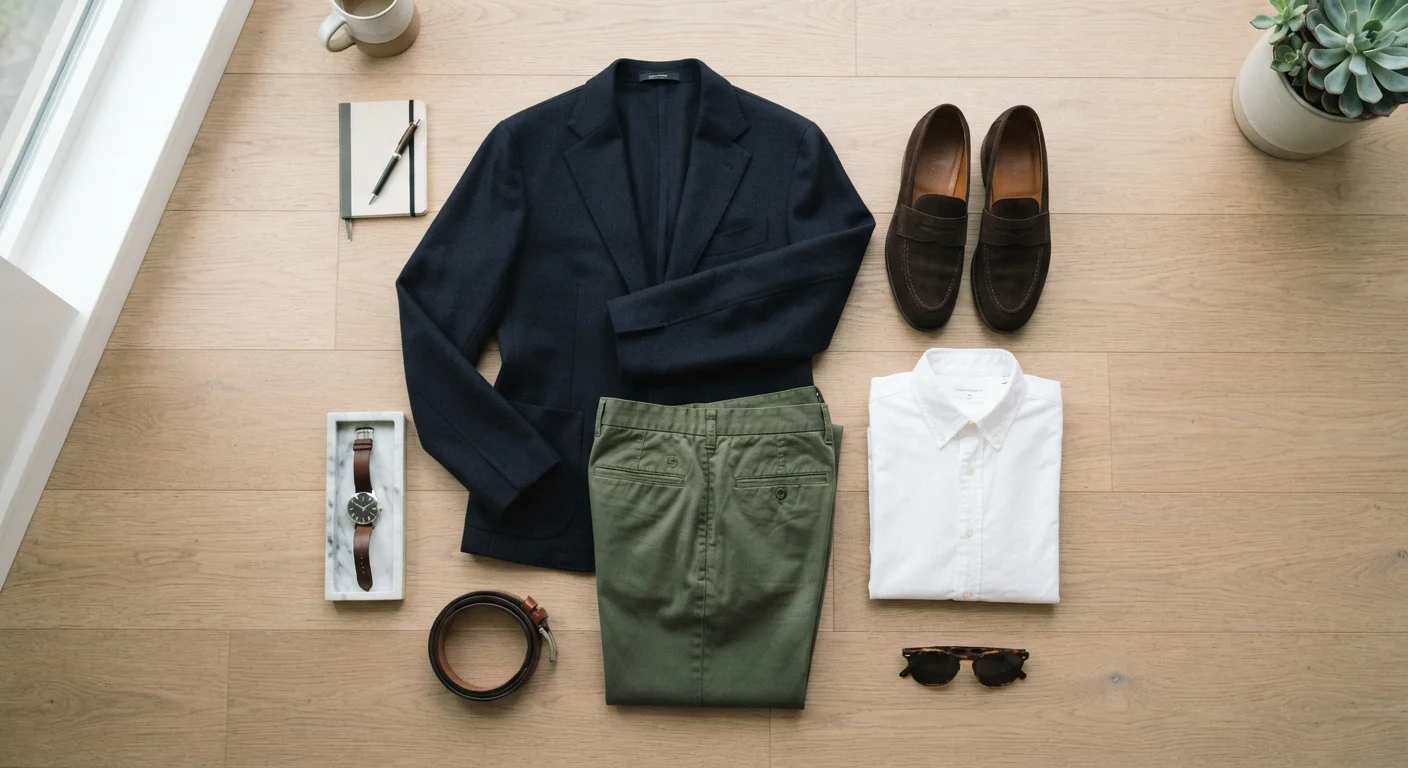
The most misunderstood code. It generally means neat, put-together attire without a full suit - think chinos, collared shirts or blouses, and leather or leather-look shoes. Jeans and sneakers are typically not included.
Smart Casual
A step more relaxed than business casual, but still intentional. Clean dark jeans may be acceptable; blazers over a T-shirt can work. The goal is stylish and deliberate, not thrown-together.
Casual
Few restrictions, but "anything goes" is not the right read. Casual still implies clean, presentable clothing that suits a social context - ripped clothing or athletic wear is usually a stretch.
Cocktail Attire
Semi-formal. A classic cocktail dress, a midi skirt with a polished top, or a well-fitted suit all work. Hemlines typically fall at or just above the knee.
Black Tie
Formal evening wear. Floor-length gowns or formal cocktail dresses for women; tuxedos for men. "Black Tie Optional" means a dark formal suit is acceptable.
When in doubt, dressing one step above the stated code is rarely a mistake. It's far easier to remove a blazer than to wish you'd worn one.
Keep color coordination principles in mind regardless of dress code - a well-matched palette elevates any outfit without requiring expensive pieces.
Reading the Room: Context Clues That Help
Dress codes rarely live in a vacuum. Industry culture, geography, and company size all shape what a label means in practice:
- Finance and law firms lean formal even when calling it "business casual." Expect polished trousers and structured blazers.
- Tech and creative agencies often use "smart casual" to mean clean, intentional streetwear - not necessarily a collared shirt.
- Southern and Midwestern events may default to slightly more conservative interpretations of casual codes than coastal urban settings.
- Company size matters: startups with ten people and Fortune 500s with dress-code policies both say "casual" but mean different things.
When attending a job interview, the dress code question becomes especially high-stakes. Our guide on getting interview-ready without buying new clothes shows how to pull a polished look from what you already own.
And if you're questioning which silhouettes actually work for your body - separate from outdated prescriptions - practical body-shape dressing advice can help you focus on fit over formula.
When to Ask Before You Go
If an invitation's dress code leaves you genuinely uncertain, it's perfectly acceptable to ask the host or HR contact for clarification. A brief, matter-of-fact question - "Could you help me understand what 'smart casual' means for this event?" - is far better than arriving underdressed. Most people appreciate that you took the occasion seriously enough to ask.