

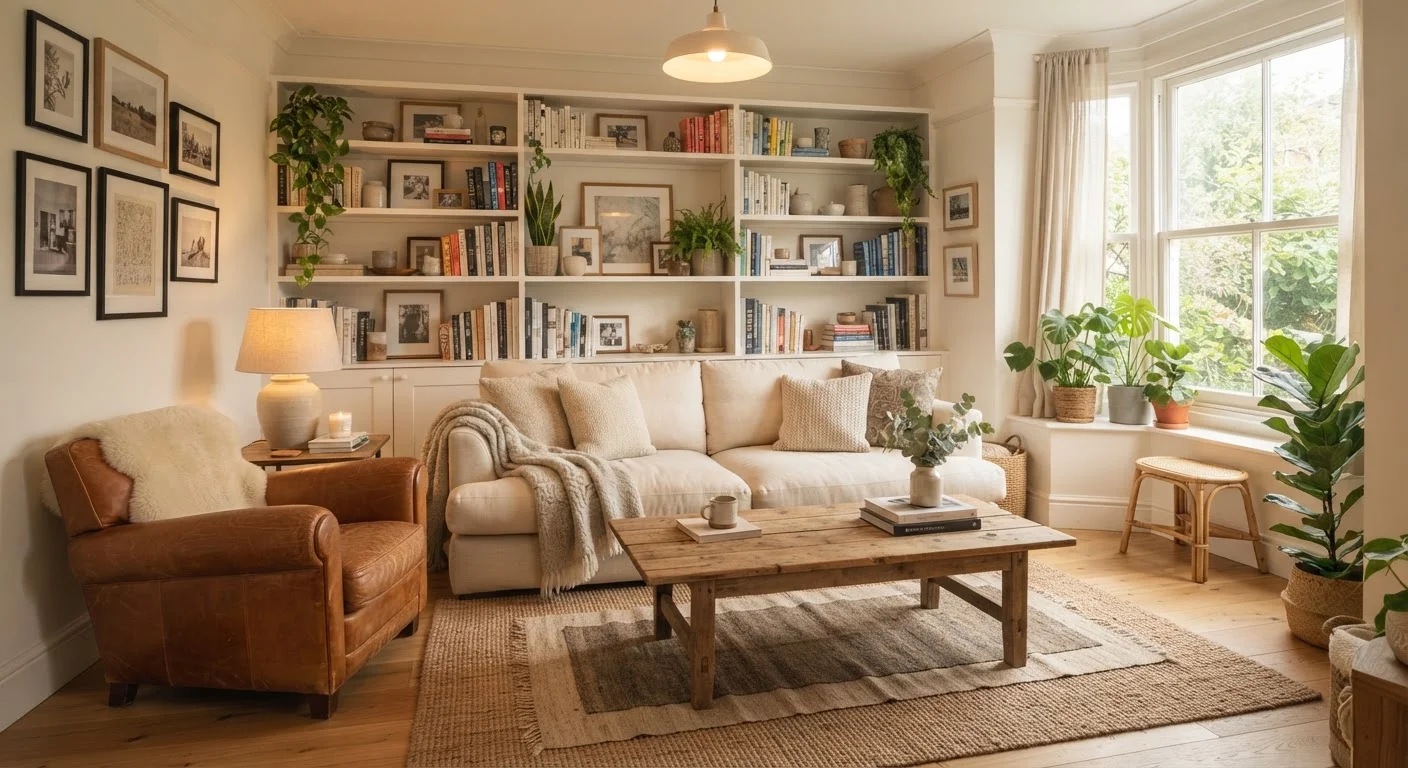
Key Takeaways
Our Verdict
When decorating on a tight budget, the smartest approach is not spending less on everything - it's spending more on the items that endure daily wear and define a room's structure, while confidently opting for affordable choices on accents and seasonal touches. This selective investment strategy lets you build a home that feels curated without overextending your finances.
| Best for | Recommended |
|---|---|
| First-time homeowners building a foundation | Invest in anchor furniture and flooring first |
| Renters or frequent movers who need flexibility | Prioritize portable accents and affordable textiles |
| Those refreshing an existing space on a tight budget | Swap out low-cost accessories before replacing furniture |
| Anyone wanting long-term value from their decor spending | Apply cost-per-use thinking to every major purchase |
The Core Principle: Cost Per Use, Not Sticker Price
Budget decorating rarely means buying the least expensive version of everything. A more useful mental model is cost per use: divide the item's price by how often - and how long - you'll realistically use it. A sofa that costs $1,200 and lasts 12 years has a far lower cost per use than a $400 alternative that deteriorates in three. The same logic applies to mattresses, dining tables, and area rugs in high-traffic zones.
This framework also works in reverse. A decorative tray, a set of throw pillows, or a seasonal wreath won't benefit from premium pricing - you may want to replace them in a year or two as your style evolves. Here, affordable options are not a compromise; they're the smarter financial move.
If you're building or refining your overall approach to home spending, the Budgeting Basics hub offers straightforward strategies for allocating money across competing household priorities.
Start With What You Touch Every Day
When deciding where to allocate a limited decor budget, ask yourself which items you interact with daily. Your sofa, desk chair, bed, and primary lighting fixtures are used constantly - those are the places where quality pays dividends. Items you occasionally glance at, like a decorative bowl or a seasonal centerpiece, are natural candidates for more affordable options. This simple filter can clarify most spending decisions before you even enter a store.
Where Spending More Pays Off
Certain home decor categories absorb daily punishment - and their quality directly affects how your space looks and feels over time. These are the categories worth a larger upfront investment:
- Seating: Sofas and armchairs that see daily use should prioritize durable frame construction and high-quality upholstery. Kiln-dried hardwood frames and tight-woven fabrics tend to outlast budget alternatives significantly.
- Mattresses and bed frames: Sleep quality is directly tied to mattress support, making this one of the clearest cases for spending more if your budget allows.
- Area rugs in high-traffic rooms: Thin, inexpensive rugs in living rooms and hallways flatten quickly and can look worn within a year. A denser, better-constructed rug in the same space can anchor the room for a decade.
- Window treatments: Lined curtains and well-made blinds do real work - managing light, improving insulation, and defining a room's proportions. Flimsy alternatives tend to look cheap and wear out faster.
- Lighting fixtures: A quality pendant or floor lamp reads as a design statement. Lighting shapes mood more than almost any other element, and a well-made fixture can move with you from home to home.
For flooring decisions specifically, our flooring comparison guide breaks down the real trade-offs between hardwood, engineered wood, laminate, and vinyl plank across different budgets and room types.
| Decor Category | Spend More | Save More | |
|---|---|---|---|
| Daily-use seating | Yes - durability directly affects longevity | Only if use is infrequent | |
| Area rugs (high traffic) | Yes - denser construction lasts far longer | Acceptable in low-traffic rooms | |
| Window treatments | Yes - quality affects light and insulation | Budget blinds work in low-priority rooms | |
| Throw pillows and textiles | Rarely - meant to be refreshed often | Yes - affordable updates are the point | |
| Wall art and frames | Only for pieces with long-term attachment | Yes - rotate affordably as taste evolves | |
| Lighting fixtures | Yes - defines mood and moves with you | Acceptable for purely functional fixtures | |
| Seasonal and holiday decor | Rarely justified | Yes - temporary use makes savings sensible |
Where Affordable Options Work Just as Well
Not every decor category rewards higher spending. In fact, spending less in these areas often makes your space more flexible and easier to refresh:
- Throw pillows and blankets: Textiles are one of the easiest and most affordable ways to update a room's palette. Replacing a set of pillows costs far less than reupholstering or buying new furniture.
- Wall art and frames: Prints, posters, and framed photos can be rotated seasonally or as your taste evolves. Spending heavily on art only makes sense if you have a strong, long-term attachment to a specific piece.
- Decorative objects and vases: Candles, small sculptures, and shelf objects fall firmly in the affordable category. Intentional negative space often does more design work than adding more objects.
- Seasonal decor: Holiday and seasonal items are, by definition, temporary. Affordable options here are almost always the right call.
- Side tables and accent furniture: Secondary pieces that don't bear much weight or daily wear - bedside tables, small console tables, decorative stools - are reasonable candidates for budget-friendly options.
If you're decorating as a renter and want to maximize impact without permanent changes, our renter's redecorating guide covers reversible upgrades that work in almost any space.
Avoid Overspending on Trendy Pieces
Fast-moving design trends - whether a specific color palette, a novelty furniture silhouette, or a popular pattern - can feel essential in the moment but date quickly. Spending heavily on trend-driven items often means replacing them sooner than expected, which undercuts the savings logic entirely. Reserve larger investments for timeless, neutral anchor pieces, and use affordable accents to experiment with current trends. This keeps your space feeling fresh without locking money into styles that may not last.
Putting It Together: A Practical Spending Framework
The most effective budget decorators tend to follow a simple hierarchy: establish structural, high-use pieces first, then layer in affordable personality. Think of your home's foundation - anchor seating, a dining table, quality lighting - as the permanent cast. Everything else can be treated as more fluid.
A few practical habits reinforce this approach:
- Set a per-category ceiling before you shop. Decide in advance what you're willing to spend on a sofa versus accent pieces. This prevents emotional overspending on items that don't justify it.
- Buy anchor pieces in neutral tones. This extends their visual lifespan and makes it easier to refresh the room around them with lower-cost swaps.
- Think about the room's purpose first. A home office chair used eight hours a day deserves more investment than a guest room accent table used a few times a year.
The same principle that applies to deferred maintenance applies here: choosing the wrong place to cut costs upfront often creates bigger expenses down the road. Knowing which decor investments hold their value - and which don't - is one of the most practical tools any homeowner or renter can develop.
For additional layout and design ideas that help smaller spaces work harder without requiring significant spending, see Decorating a Small Living Room Without Sacrificing Function.