
Room by Room: A Complete Starting Point for New Homeowners Decorating From Scratch

Key Takeaways
Start here
Where to Begin: Setting Your Decorating Foundation
Next
The Living Room: Your Home's First Impression
Then
Bedroom: Function Before Aesthetics
Keep going
Kitchen and Dining: Practical Spaces That Still Deserve Style
Almost there
Bathroom and Entryway: Small Spaces, Big Impact
Finish strong
Pulling It All Together
Where to Begin: Setting Your Decorating Foundation
Before you buy a single piece of furniture or choose a paint color, the smartest move is to establish a whole-home framework. Decorating room by room without a shared direction often results in spaces that feel disconnected - a modern kitchen next to a maximalist living room next to a beachy bedroom can feel jarring rather than curated.
Anchor color
A dominant, recurring color that ties multiple rooms together visually. It typically appears on walls, large furniture, or textiles throughout the home.
Layered lighting
A lighting approach that combines multiple sources - overhead, task, and accent - to create warmth and flexibility in a room rather than relying on a single fixture.
Scale
The size of furniture relative to the room and to other pieces in it. Furniture that is too large or too small for a space disrupts visual balance and practical usability.
Style direction
A general aesthetic approach - such as minimalist, traditional, or eclectic - that guides your choices across rooms so the home feels unified rather than random.
Focal point
The visual anchor of a room - a fireplace, a large piece of art, or a prominent window - around which furniture and decor are arranged to create a sense of order.
Start by asking yourself a few grounding questions: How do you actually live? Do you cook often, work from home, or frequently have guests? What colors and textures consistently draw your attention? Your answers shape every decision that follows.
Once you have a general style direction in mind, choose a limited palette - typically two to three neutral or anchor colors - that can thread through every room. From there, individual spaces can each have their own personality while still feeling like part of the same home. Not sure where to land on style? The plain-English guide to interior design styles is a helpful place to clarify your aesthetic instincts before you start spending.
The Living Room: Your Home's First Impression
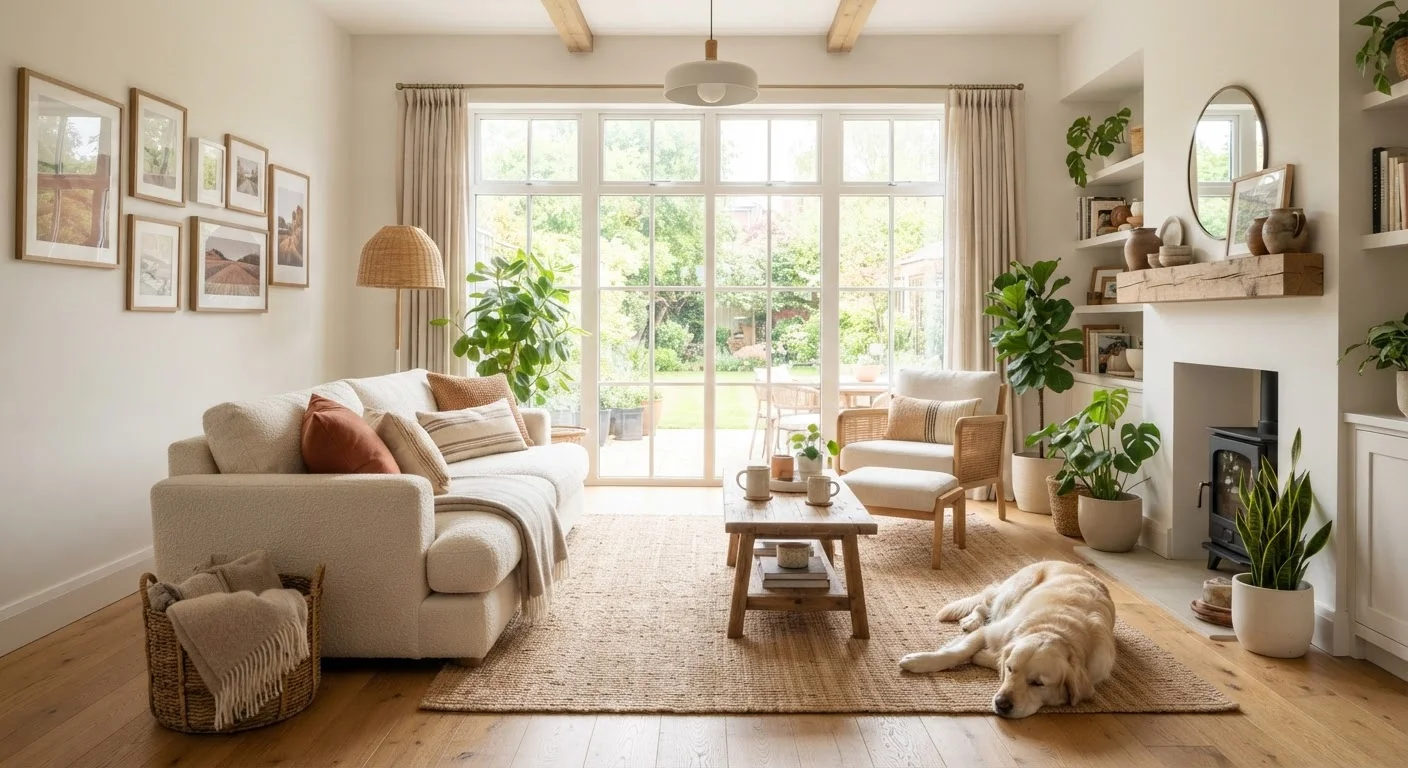
The living room is typically the largest shared space and the one visitors see first, which makes it worth prioritizing early. Begin with the sofa - it is the room's anchor and the piece everything else responds to. Choose a size appropriate to the room's footprint, leaving enough walkable space around it.
After seating, establish your lighting plan. Overhead lighting alone creates flat, unflattering light. Layering in floor lamps, table lamps, or sconces produces warmth and flexibility. A rug defines the seating area and adds texture; as a general rule, the front legs of all key furniture pieces should sit on the rug.
Live in the Room Before Finalizing It
Resist the urge to fill every corner immediately after moving in. Spending even two to three weeks in a room often reveals traffic patterns, lighting needs, and functional gaps that change what you actually want to buy. Decorating decisions made from experience tend to stick longer than those made from a floor plan alone.
If you are working with a smaller living room, layout becomes especially critical. The guide to decorating a small living room without sacrificing function covers smart layout strategies that keep the space feeling open and livable.
Bedroom: Function Before Aesthetics
Good sleep is directly connected to your environment, which is why the bedroom deserves early attention. The bed frame and mattress are your primary investment - prioritize comfort and durability here. Once your bed is in place, arrange other furniture to ensure clear pathways and easy access to storage.
Window treatments matter more in the bedroom than in almost any other room. Light-blocking curtains or blinds meaningfully improve sleep quality. Beyond that, focus on bedside lighting you can control from bed, adequate closet or dresser storage, and a color palette that feels calming rather than stimulating.
Bedroom Décor Can Wait
Many new homeowners feel pressure to have a fully styled bedroom immediately. In practice, settling for a functional setup first - bed, storage, blackout curtains - and adding decorative layers over time produces better long-term results. Rushed decorating decisions are among the most commonly regretted purchases.
Decorative layers - throw pillows, artwork, rugs - can wait until the functional decisions are settled. A bedroom that functions well is far more valuable than one that photographs beautifully but feels restless to sleep in.
Kitchen and Dining: Practical Spaces That Still Deserve Style
In the kitchen, your decorating options are often constrained by what already exists - cabinetry, countertop material, and appliances are rarely the first things a new homeowner replaces. Focus instead on what you can change: hardware, lighting, open shelving arrangements, and textiles like dish towels and a runner rug.
For the dining area, the table size should match both your space and your typical household size. A table that seats six in a room only large enough for four creates daily frustration. Pendant lighting or a chandelier above the table adds warmth and defines the zone, even in an open-plan layout.
For those working with a tight budget across the whole home, the guide to home decor on a tight budget offers a practical framework for deciding where investment makes sense versus where affordable alternatives work just as well.
Bathroom and Entryway: Small Spaces, Big Impact
Bathrooms are compact, which means a few well-chosen elements go a long way. Fresh towels in a coordinated color, a simple mirror upgrade, and a small plant or framed print can substantially change a bathroom's feel without renovation. Organized storage - open shelving, a medicine cabinet, or baskets under the vanity - keeps the space functional and visually calm.
The entryway is the first thing you and your guests experience and the last thing you see on your way out. Even a small foyer benefits from a dedicated spot for keys, a hook or two for coats, and something visually grounding like a mirror or a piece of art. A narrow console table, a small bench, or even a wall-mounted shelf can accomplish all of this in minimal square footage.
Don't Overlook Electrical and Structural Limits
When planning lighting changes or built-in shelving, check what your walls and electrical system can support before proceeding. Work involving wiring, load-bearing walls, or significant structural changes typically requires permits and a licensed professional. Always verify local code requirements before beginning any improvement beyond cosmetic changes.
Pulling It All Together
Once individual rooms are taking shape, step back and evaluate the home as a whole. Walk from room to room and look for consistency - do colors, materials, and furniture scales feel related? Shared elements like wood tones, metal finishes, or a repeated accent color are among the simplest ways to create cohesion.
Decorating a home from scratch is rarely finished in a single pass, and that is entirely fine. Living in your space before finalizing every decision usually leads to better choices. Rooms evolve as your life in them does. The goal at this stage is a livable, functional home with a clear direction - not a finished showroom.
For broader home upkeep as you settle in, the home maintenance hub is a helpful companion to keep your newly decorated spaces in good shape over time. And if pets are part of your household, see the room-by-room pet preparation checklist to make your home safe and welcoming for them too.